On July 19, 2026, Spain defeated Argentina 1-0 after extra time to win the FIFA World Cup at MetLife Stadium in New Jersey. The victory was the culmination of a remarkable tournament in which Spain controlled possession, consistently created scoring opportunities, and conceded just one goal across eight matches.
But one of the most revealing details about Spain’s success wasn’t what happened during the final. It was where the players had developed.
Spain’s World Cup squad was built overwhelmingly around players who had spent their formative years within Spanish club academies. According to LaLiga, all but one member of the squad had developed within its academy system, with players representing 12 different academies.
That success wasn’t the product of one famous training facility or a single exceptional generation. It reflected a youth soccer development system built around consistent coaching, technical education, competitive opportunities, and a shared understanding of how young players learn the game.
For North American families, understanding how Spanish soccer academies operate offers valuable insight into why Spanish players often appear so comfortable under pressure. It also reveals what young international players can expect when entering a Spanish training environment and which development habits they can begin building at home.
This guide explores how Spain’s youth soccer system works, what makes its coaching methods distinctive, how professional academies identify talent, and how years of development helped produce the country’s 2026 World Cup-winning team.
How Do Spanish Soccer Academies Develop Young Players?
Spanish soccer academies develop young players through a long-term system that combines structured coaching, age-appropriate competition, tactical education, and progressive opportunities to compete at higher levels. Rather than focusing exclusively on individual technical skills, the Spanish approach places considerable importance on helping players understand the game and make effective decisions.
This philosophy extends beyond famous professional academies such as FC Barcelona’s La Masia and Real Madrid’s La Fábrica. Established community clubs throughout Spain also operate within organized competitive structures, introducing young players to similar development principles from an early age.
What Makes the Spanish Youth Development System Different?
Five interconnected elements help explain how Spain approaches youth soccer development:
- A consistent age-category structure: Players progress through established development stages, beginning with small-sided soccer before transitioning to the full-sized game.
- Qualified coaching: Spain has invested heavily in coach education, with structured qualifications available throughout the country’s regional football systems.
- Game-based training: Sessions frequently incorporate possession exercises, small-sided games, and tactical scenarios that develop several abilities simultaneously.
- Defined club philosophies: Professional academies follow distinct playing models that influence how players are coached and evaluated.
- Progression toward senior soccer: Reserve teams and competitive youth leagues provide opportunities for talented players to experience increasingly demanding football.
None of these elements is unique to Spain. What makes the system interesting is how they’re connected throughout a player’s development, from their earliest organized matches to the transition toward senior competition.
A young player may spend more than a decade learning to receive under pressure, recognize passing options, and understand positional responsibilities before approaching professional football. By that stage, many of these behaviors have become natural parts of their game.
What Are the Spanish Youth Soccer Age Categories?
Spanish youth soccer, commonly known as fútbol base, follows an established age-category structure that guides players from their earliest organized matches toward senior football.
Players generally progress through two-year developmental categories, although exact birth-year cutoffs and competition formats can vary by federation and season. Each stage introduces greater tactical complexity, competitive demands, and responsibilities.
How Do Players Progress Through Spain’s Youth Categories?
Prebenjamín: Approximately Ages 5 to 7
The youngest players are introduced to organized football through activities emphasizing enjoyment, ball familiarity, coordination, and teamwork. Games use age-appropriate formats, and the primary objective is developing confidence and a positive relationship with the sport.
Benjamín: Ages 8 to 9
Players begin developing more structured technical habits, including passing, receiving, shooting, and basic positional awareness. Many regional competitions use fútbol 8, an eight-a-side format that provides more involvement than full 11-a-side soccer.
Alevín: Ages 10 to 11
Alevín players continue developing technical skills while learning more advanced tactical concepts. Coaches introduce ideas such as creating space, defensive coverage, passing combinations, and maintaining team organization.
Infantil: Ages 12 to 13
Infantil is generally the stage at which players transition into full 11-a-side football. The larger field introduces new challenges, including more complex positional responsibilities, longer passing distances, and greater tactical organization.
Cadete: Ages 14 to 15
At the Cadete level, competition becomes increasingly demanding. Players are expected to demonstrate greater tactical understanding, technical consistency, and the ability to perform within established team systems.
Juvenil: Ages 16 to 18
Juvenil is the final major youth development stage before senior football. Players face stronger competition while preparing for the technical, tactical, physical, and psychological demands of adult soccer.
Why Does Spain Use Small-Sided Soccer During Early Development?
One of the most important features of Spanish youth soccer is the extensive use of smaller playing formats before the transition to 11-a-side football.
A young player participating in fútbol 8 has more opportunities to receive possession, make decisions, defend, and interact with teammates than they would typically experience in a full-sized match. The reduced space also encourages faster reactions and greater involvement in every phase of play.
By the time a Spanish player reaches Infantil, they may have accumulated six or more seasons of structured small-sided competition. Those years provide repeated opportunities to develop first touch, spatial awareness, passing accuracy, and decision-making.
This helps explain why visiting international players sometimes find Spanish teenagers particularly comfortable in tight spaces. Their composure isn’t necessarily the result of exceptional natural talent. It can reflect thousands of repetitions within environments designed to develop those habits.
Do Community Clubs Compete Against Professional Academies in Spain?
Spain’s youth competition structure creates opportunities for established community clubs and professional academy teams to participate within the same regional football systems.
Competitions are generally organized by regional federations, with teams placed into divisions according to age and competitive level. This means a strong community-based youth club can potentially compete against teams associated with professional organizations.
At the upper end of youth football, the División de Honor Juvenil represents Spain’s highest national under-19 competition, organized into regional groups. Leading teams can progress into national competitions such as the Copa de Campeones and Copa del Rey Juvenil.
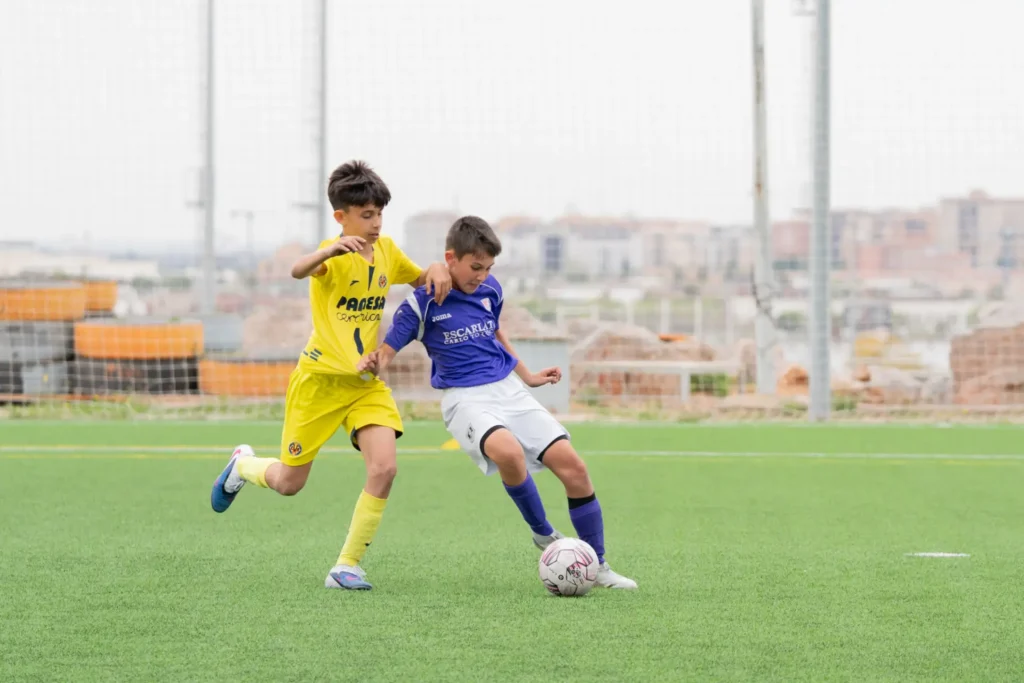
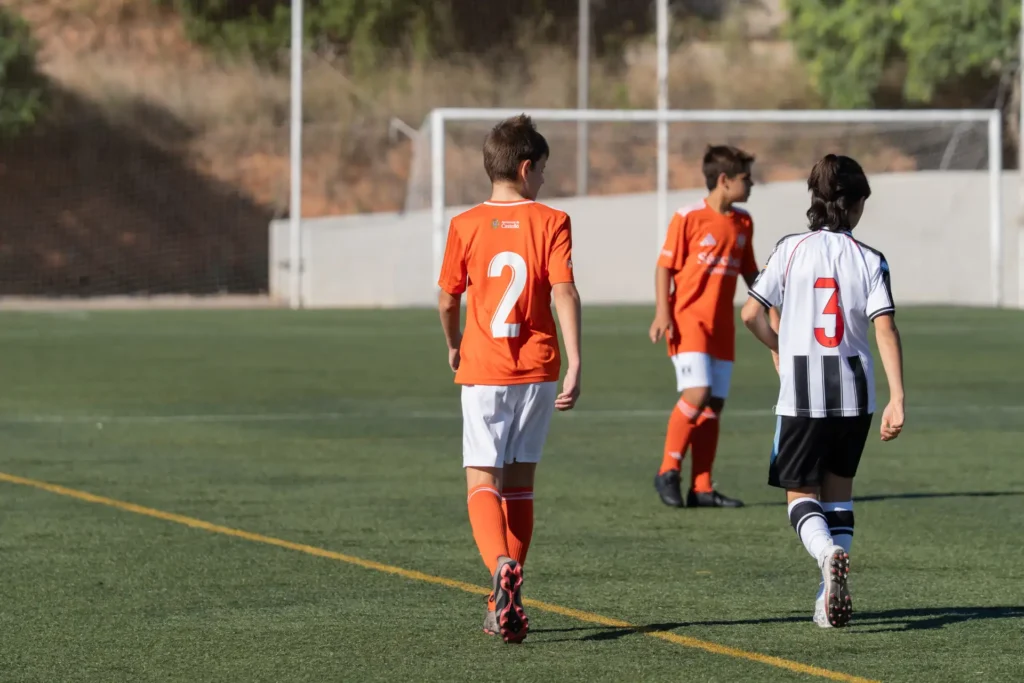
For international families, the structure provides an important perspective. A 14-year-old joining a Spanish Cadete team may train alongside players who have spent most of their childhood developing within this system.
At Primer Toque CF, international player experiences are designed around participation in appropriate existing club training environments, matched to the player’s age and level. This allows visitors to experience the expectations and habits of established Spanish youth teams rather than training exclusively within a temporary international group.
Why Does Spain Have So Many Qualified Youth Soccer Coaches?
Spain’s reputation for player development is closely connected to its investment in coaching education. The country has historically maintained a large network of licensed coaches working throughout professional academies, community clubs, and regional youth football programs.
Professional clubs may attract the most attention, but much of a player’s development occurs long before they reach an elite academy. The knowledge and teaching ability of coaches working with younger age groups can have a significant influence on how players understand the game.
How Does Spain’s Coaching Education Compare With Other Countries?
Historical UEFA coaching qualification figures illustrate the scale of Spain’s coaching network.
In 2013, Spain reportedly had 2,140 coaches holding UEFA Pro licences and 12,720 holding UEFA A licences. England, by comparison, had 203 UEFA Pro licence holders and 1,161 UEFA A licence holders.
By 2017, Spain reportedly had more than 15,000 coaches holding one of those two qualifications, compared with approximately 1,800 in England.
These are historical figures rather than current licence totals, and UEFA has cautioned that international comparisons aren’t always directly equivalent. Still, they help illustrate the size of Spain’s qualified coaching workforce.
Coach education is delivered throughout the country’s regional football structure, making formal development opportunities available beyond the professional game.
Why Does Spanish Coach Education Emphasize Teaching Methods?
An important feature of Spanish coaching education is its emphasis on understanding how young players learn.
Coaching courses incorporate areas such as pedagogy, psychology, physical development, and communication alongside technical and tactical instruction. Coaches are expected to understand how to organize training, observe player behavior, adapt exercises, and evaluate whether learning is taking place.
The objective isn’t simply to produce coaches who can demonstrate effective drills.
It’s to develop educators who understand how to help players recognize and solve situations independently.
Why Do Spanish Coaches Ask Players Questions During Training?
Villarreal CF provides an interesting example of player-centered coaching.
The club’s methodology department has described an approach that encourages coaches to observe players, guide learning, and ask questions rather than constantly provide instructions.
Instead of immediately telling a midfielder where they should have passed, a coach might ask what options were available or how their body position affected the decision.
This encourages the player to reflect on the situation and understand why a different action may have been more effective.
A player who understands the reasoning behind a decision is better prepared to recognize a similar situation during a match, when the coach can’t provide an immediate answer.
For families evaluating youth soccer programs, the quality of coaching and the ability to develop understanding can matter more than the reputation of the club itself.
What Does a Typical Training Week Look Like in a Spanish Soccer Academy?
A typical training week for many competitive Spanish youth teams includes several organized sessions and a weekend match. The exact schedule varies by club, age, and competitive level, with elite academies often following more demanding programs.
A published study of 13-year-old players at a Spanish club academy described a weekly structure consisting of three training sessions lasting approximately 90 minutes each, followed by a competitive match.
That training volume isn’t dramatically different from what many competitive North American players experience. One of the more interesting differences is how Spanish coaches structure the activities within those sessions.
Why Do Spanish Academies Use So Many Small-Sided Games?
Small-sided games are frequently used because they allow coaches to develop technical ability, tactical understanding, and physical performance within the same exercise.
In the Spanish academy study, players participated in 5v5 games on a field measuring approximately 37 by 20 meters. Researchers examined how variations in the exercises affected physical performance, including distance covered, accelerations, and changes of direction.
Possession-focused games produced particularly demanding physical responses, demonstrating how exercises designed to develop passing and positioning can also challenge players athletically.
This approach reflects an important principle of Spanish training: technical, tactical, and physical development don’t always need to be separated.
A well-designed exercise can require players to receive accurately, recognize space, make decisions, communicate, and repeatedly accelerate under pressure.
What Is a Rondo, and Why Is It Important in Spanish Soccer?
The rondo is one of the most recognizable exercises associated with Spanish football.
In a typical rondo, a group of players attempts to maintain possession while a smaller number of defenders apply pressure within a limited space. The objective may appear simple, but the exercise develops several important habits simultaneously.
Players must constantly adjust their positions, create passing angles, recognize defensive pressure, and decide what to do before receiving the ball.
The exercise can help develop:
- Scanning and awareness before receiving possession.
- Body positioning and first-touch preparation.
- Quick, accurate passing under pressure.
- Movement to create supporting angles.
- Immediate reactions when possession is lost.
FC Barcelona’s academy has long been associated with incorporating rondos into its training methodology from younger age groups.
Repeated over many years, exercises like these help players develop behaviors that eventually become more automatic during matches.
How Does Spanish Training Develop the Whole Player?
Spanish coaching has also been influenced by the work of Paco Seirul·lo, whose approach to structured training emphasizes that a player’s abilities are interconnected.
Rather than viewing technical skill, physical conditioning, tactical awareness, and psychological development as entirely separate components, this philosophy considers how they influence one another.
A small-sided game, for example, can develop technical execution while also challenging concentration, communication, coordination, creativity, and decision-making.
For international players entering a Spanish training environment, the result can feel unfamiliar. The exercises may appear relatively simple, yet the demands are significant because players must repeatedly solve realistic problems under pressure.
How Do Spain’s Leading Professional Soccer Academies Differ?
Spain’s leading professional academies share a commitment to long-term development, but they don’t all follow the same philosophy.
Some emphasize a clearly defined style of play, while others prioritize regional recruitment, individual development, or progressive opportunities to compete at senior levels.
Understanding these differences helps explain why Spanish football has produced talented players through several distinct academy systems.
FC Barcelona’s La Masia: Developing Players Within a Playing Philosophy
FC Barcelona’s academy is closely associated with possession-based football, positional play, and coordinated team movement.
Players learn to recognize space, maintain passing relationships, and make decisions that support the team’s collective objectives. The club’s methodology emphasizes understanding the game as much as executing individual technical skills.
Barcelona has also been one of Europe’s most productive academies. According to CIES Football Observatory data published by LaLiga in 2024, the club had developed 46 players competing in Europe’s five major leagues.
La Masia’s residential structure also provides educational and personal support for young athletes, reflecting the club’s long-term approach to development.
Real Madrid’s La Fábrica: A Competitive Pathway Toward Senior Football
Real Madrid’s youth academy, commonly known as La Fábrica, operates through a progression of age-group teams leading toward Real Madrid Castilla and, for selected players, the first team.
The academy prepares players for increasingly demanding competition, where technical ability must be supported by tactical understanding, physical readiness, and consistency.
In the same 2024 CIES analysis, Real Madrid had 34 academy graduates competing across Europe’s top five leagues.
The academy illustrates how long-term development and competitive progression are connected. As players advance, they’re expected to demonstrate that their individual strengths can contribute effectively within a team.
Villarreal CF: A Player-Centered Approach to Development
Villarreal CF’s development philosophy places considerable importance on understanding the individual player.
Coaches use observation, questioning, and active learning to help players recognize situations and improve their decision-making. Individual mentoring and development objectives also form part of the club’s approach.
Rather than evaluating young athletes exclusively through short-term results, Villarreal emphasizes the learning process and the player’s longer-term progression.
The club’s academy had produced 17 players competing in Europe’s top five leagues in the 2024 CIES analysis.
Athletic Club and Real Sociedad: The Importance of Local Development
Athletic Club offers one of the most distinctive recruitment models in European soccer. Its long-standing philosophy focuses on players born or developed within the Basque football environment.
To support this model, Athletic maintains relationships with a substantial network of local clubs, helping identify and develop talent throughout the region.
Real Sociedad follows a similarly strong regional development approach through its Zubieta academy, working closely with community clubs in Gipuzkoa.
The club has emphasized patience in early recruitment, allowing younger players to continue developing within their local environments rather than bringing them into an academy prematurely.
These approaches illustrate an important principle: professional development doesn’t always require moving talented children into elite academies as early as possible.
Valencia CF: Developing Talent Within a Competitive Regional System
Valencia CF has one of Spain’s established professional youth academies and operates within a competitive regional football environment.
According to the 2024 CIES analysis, Valencia had produced 26 players competing in Europe’s five major leagues, placing it among the continent’s leading academies for developing professional talent.
The club is also part of a broader youth football ecosystem that includes established community clubs throughout the Valencia region.
Primer Toque CF, based in Castellón, operates within this regional structure and has an official club partnership with Valencia CF. Its teams compete within the regional federation system against opponents that include youth teams associated with Valencia CF, Villarreal CF, Levante UD, CD Castellón, and Elche CF.
For international players, this competitive environment provides an opportunity to understand the standards associated with Spanish youth soccer.
The relationship shouldn’t be confused with a guaranteed recruitment pathway into a professional academy. Its value lies in the coaching environment and competitive development opportunities available within the region.
What Do Spain’s Leading Academies Have in Common?
Despite their different philosophies, Spain’s leading academies share several important characteristics.
They emphasize long-term development, establish clear expectations for players, invest in coaching, and provide increasingly demanding competitive environments.
The 2024 CIES research placed six Spanish clubs among Europe’s 20 leading producers of players competing in the five major leagues.
That distribution is important because it shows that Spain’s player development reputation doesn’t depend entirely on Barcelona or Real Madrid. Strong academy structures exist across several professional organizations, supported by the wider youth football system.
How Do Spanish Soccer Academies Select and Develop Talented Players?
Spanish professional academies identify young players through scouting, competitive observation, and assessments of technical ability, tactical intelligence, physical development, and long-term potential.
Selection isn’t simply about identifying the strongest player in a particular match.
Clubs must consider how young athletes are likely to develop over several years, including how physical maturation may influence their current performance.
What Qualities Predict Success in Spanish Soccer Academies?
A 2024 University of Essex study followed 198 players from two professional academies in Madrid over approximately ten years.
The research found that around 6% progressed into full-time professional soccer, while approximately 4% reached Spain’s highest professional league.
Players who achieved professional success demonstrated strengths in areas including self-confidence, ball reception, dribbling, and coaches’ evaluations of technical ability.
These findings suggest that technical development and psychological qualities are important considerations when evaluating long-term potential.
They also highlight how competitive the professional pathway remains, even for players who have already entered elite academy environments.
How Does Physical Maturity Affect Academy Selection?
The same study identified a significant relative age effect among academy players.
Approximately 44% of the original group had been born during the first three months of the calendar year. None of the players who eventually became professionals had been born during the final three months.
These findings reflect the potential influence of physical development on youth talent identification.
A 13-year-old born early in the selection year may be physically more mature than a teammate born several months later. That advantage can influence performance and how coaches perceive potential.
But physical dominance during adolescence doesn’t necessarily indicate who will become the strongest adult player.
Why Do Some Spanish Academies Delay Recruitment?
Some clubs deliberately avoid recruiting players too early.
Real Sociedad, for example, has emphasized allowing younger athletes to remain within local football environments before bringing them into its academy structure.
This approach recognizes that player development isn’t always linear.
A young athlete who appears ordinary at 12 may develop rapidly several years later, while an early physical advantage may become less significant as teammates mature.
For North American families, the lesson is useful.
A player who’s smaller or developing later than teammates isn’t necessarily behind in their long-term development. Technical ability, tactical understanding, confidence, and consistent practice remain important regardless of physical maturity.
How Do Spanish Soccer Academies Balance Education and Football?
Leading Spanish academies recognize that player development extends beyond training and competition.
Because relatively few academy players eventually establish professional careers, education and personal development are important parts of preparing young athletes for the future.
How Do Professional Academies Support Schooling?
Real Sociedad provides an example of how academic expectations can be integrated into a development program.
The club has reported that nearly all its academy players, from the reserve team downward, are studying or have completed their education. Dedicated teaching staff help players meet academic expectations while continuing to train and compete.
FC Barcelona’s La Masia residence also provides educational support, including individual tutoring and guidance from staff responsible for player welfare.
These systems recognize that pursuing competitive soccer shouldn’t require young athletes to abandon their academic development.
Why Is Player Welfare Important in Spanish Academies?
LaLiga’s national academy development initiatives have incorporated areas such as mental health, safeguarding, education, and personal development.
The objective is to strengthen academy environments so young players receive appropriate support throughout their development.
This matters because the pressure associated with elite youth soccer can be significant.
Players face competition for places, physical and psychological challenges, academic responsibilities, and uncertainty about their future.
A strong development environment helps young athletes manage these demands while recognizing that their personal growth remains important regardless of their eventual playing level.
How Do Spanish Academy Players Reach Professional Football?
One distinctive feature of Spain’s professional soccer structure is the role of reserve teams, commonly referred to as B teams.
These teams provide a bridge between youth academy football and senior competition.
Rather than limiting developing players exclusively to youth matches, professional clubs can give selected prospects opportunities to compete against experienced adult opponents while remaining within the club’s structure.
Why Are Reserve Teams Important in Spain?
Teams such as Real Madrid Castilla, Villarreal B, and Bilbao Athletic compete within Spain’s senior league system.
Depending on the season, reserve teams may participate in professional or semi-professional divisions, although competition rules prevent them from playing in the same division as their parent club’s first team.
This structure introduces young players to challenges that can be difficult to reproduce through youth competition alone.
Adult opponents may be physically stronger, more tactically experienced, and better prepared to exploit mistakes.
For talented academy players, this creates an important intermediate development stage before first-team football.
Do Spanish Clubs Give Academy Graduates More Opportunities?
Research cited by LaLiga suggests that Spanish clubs have historically provided significant first-team opportunities for academy-developed players.
During the 2023-24 season, academy-trained players reportedly accounted for 19.4% of minutes played in LaLiga.
For comparison, the equivalent figures were approximately 14.9% in France’s Ligue 1, 8.6% in Germany’s Bundesliga, 8% in England’s Premier League, and 5.5% in Italy’s Serie A.
These figures relate to that specific season, but they illustrate the role academy graduates have played within Spanish professional football.
Spain’s investment in youth development is therefore reflected not only in training facilities and coaching qualifications, but also in opportunities for players to progress toward senior competition.
How Did Spanish Soccer Academies Contribute to the 2026 World Cup Victory?
Spain’s 2026 World Cup victory provided a powerful example of how the country’s youth development system can influence performance at the highest international level.
On July 19, Spain defeated Argentina 1-0 after extra time, with Ferran Torres scoring the winning goal in the 106th minute.
The team’s performance throughout the tournament reflected several characteristics commonly associated with Spanish football: controlled possession, tactical organization, technically reliable players, and the ability to remain patient under pressure.
What Did Spain’s World Cup Final Reveal About Its Playing Style?
Spain dominated large portions of the final, finishing with approximately 65% possession and 20 shots compared with Argentina’s two.
The team repeatedly worked possession into attacking areas while maintaining defensive organization.
Argentina’s second-half red card also influenced the match, particularly during extra time, so the final shouldn’t be treated as proof of one development philosophy’s superiority.
Still, the performance demonstrated several principles that Spanish coaches emphasize throughout youth development.
Players consistently created passing options, maintained positional relationships, and showed patience when attacking a disciplined opponent.
Those behaviors are closely connected to the habits developed through years of possession exercises, positional games, and competitive training.
Which Spanish Academies Developed the World Cup Squad?
Spain’s championship squad included players who had developed through several different academy systems.
FC Barcelona’s La Masia contributed players including Lamine Yamal, Gavi, Pau Cubarsí, and Dani Olmo, while Athletic Club’s Lezama system developed players such as Unai Simón and Nico Williams.
According to LaLiga, all but one squad member had spent important development years within its academy system, with 12 different academies represented.
Spain’s head coach, Luis de la Fuente, had also worked extensively within the country’s youth national team structure before becoming senior manager.
The connection between youth development and senior performance is significant.
These players arrived at the national team having experienced years of organized training, competitive football, and tactical education within Spanish club environments.
What Does Spain’s World Cup Success Tell Us About Youth Development?
No single match or tournament can prove that one country’s youth development approach is the best.
International success depends on many factors, including individual talent, coaching decisions, injuries, opposition quality, and match circumstances.
The more interesting lesson is the relationship between Spain’s academy structure and the characteristics demonstrated by its national team.
Players developed across different clubs were able to operate within a coordinated tactical system, maintain technical quality under pressure, and adapt to demanding match situations.
Spain’s World Cup victory highlighted the collective contribution of its wider development system rather than the influence of one academy alone.
What Can North American Players Learn From Spanish Soccer Academies?
North American players don’t need to relocate to Spain to benefit from its development principles.
Many of the habits emphasized in Spanish youth soccer can be incorporated into existing training environments, including club sessions, individual practice, futsal, and informal games.
The most useful lessons involve how players practice, how they interpret situations, and how they approach long-term improvement.
Five Spanish Soccer Development Principles Players Can Apply at Home
1. Prioritize Small-Sided Soccer
Small-sided games provide repeated opportunities to receive possession, make decisions, and solve tactical problems. Futsal, small-sided club training, and informal games can help players accumulate valuable repetitions in limited spaces.
2. Learn to Make Decisions Before Receiving the Ball
Scanning and body positioning are essential habits for players who want to perform effectively under pressure. Practicing awareness before receiving possession can help players recognize options earlier and reduce unnecessary touches.
3. Combine Technical Practice With Realistic Game Situations
Isolated technical drills can help develop specific skills, but players also need opportunities to apply those abilities against defenders. Game-based exercises connect technical execution with tactical decisions and movement.
4. Look for Coaches Who Encourage Understanding
A coach who asks players to explain their decisions can help develop independent problem-solving. Understanding why a particular action was effective makes it easier to recognize similar situations during matches.
5. Be Patient With Long-Term Development
Physical growth and early performance don’t always predict future success. Players should focus on technical improvement, tactical awareness, confidence, and consistent practice rather than comparing themselves exclusively with teammates who may be developing at different rates.
What Can International Players Learn by Training Inside a Spanish Club?
For some players, experiencing a Spanish training environment firsthand provides a clearer understanding of these principles.
They can observe how local teammates position themselves, how quickly decisions are made, and how coaches connect tactical instructions with technical execution.
A player who has spent years competing within the same regional league may discover that certain habits need to change when facing unfamiliar tactical demands.
At Primer Toque CF, visiting international players can experience training within appropriate existing club teams and receive feedback about their performance.
The objective isn’t simply to compare players based on who performs best during a few sessions.
It’s to help them understand which abilities translate effectively into the Spanish environment, where they encounter difficulties, and what they should focus on improving.
For players interested in exploring the broader value of international training, our guide to European soccer development programs explains how these experiences can complement long-term development at home.
Frequently Asked Questions About Spanish Soccer Academies
At What Age Do Spanish Soccer Academies Start?
Spanish youth soccer generally begins with the Prebenjamín category, which includes children approximately five to seven years old. Professional academies may recruit at different ages depending on their philosophy and development structure. Real Sociedad, for example, has historically emphasized later recruitment and allowing younger players to remain within community clubs.
Do Spanish Soccer Academies Charge Players?
Professional club academies generally fund the development of players officially selected into their competitive programs. Separately, clubs, foundations, and independent organizations may operate paid camps, international training experiences, and residential development programs. Families should understand which type of opportunity they’re considering.
What Is La Masia?
La Masia is the name commonly associated with FC Barcelona’s youth academy and residential development environment. The academy is particularly known for its emphasis on possession-based football, positional play, and developing technically intelligent players.
How Many Hours a Week Do Spanish Academy Players Train?
Training schedules vary by club, age group, and competitive level. One published study of young Spanish academy players described a typical week involving three sessions of approximately 90 minutes and a weekend match. Older elite academy players may follow more intensive schedules.
Can American Players Join Spanish Soccer Academies?
American players can participate in suitable short-term training experiences in Spain, but official academy registration is a separate process. International transfers and certain first registrations involving players under 18 are restricted by FIFA regulations, with limited exceptions. Families should distinguish between participating in training and officially joining a club’s competitive academy.
What Does Spain’s Youth Soccer System Teach Us About Player Development?
Spain’s 2026 World Cup victory wasn’t the result of one academy, one exceptional coach, or a single approach to training.
It reflected a broader development environment that has evolved over decades.
Young players progress through age-appropriate competition, accumulate years of small-sided soccer experience, and learn from coaches who increasingly connect technical skills with tactical understanding.
Professional academies introduce additional structure, while regional clubs contribute to the competitive environment that supports development throughout the country.
For North American players, the most important lesson isn’t that effective development can only happen in Spain.
It’s that the qualities associated with Spanish players, including composure under pressure, positional awareness, intelligent decisions, and technical consistency, are developed through repeated practice over many years.
These habits can be learned and improved in different environments.
But experiencing Spanish soccer firsthand can give young players a valuable reference point for understanding what those habits look like in practice.
Experience Spanish Soccer Development With Primer Toque CF International
Primer Toque CF International provides competitive youth players and teams with opportunities to experience an established Spanish soccer club environment in Castellón, within the Valencia region.
Through individual player assessments, team evaluations, and youth tournament experiences, participants can experience the coaching methods, tactical expectations, and competitive demands described in this guide.
The emphasis is on meaningful training, appropriate competition, and honest feedback that helps players understand their current level and identify priorities for improvement.
Understand how Spanish players develop. Experience the standard. Discover your next step.
Explore Primer Toque CF International’s soccer development programs in Spain.