

In the 2022 FIFA World Cup, 19 of the 26 players on the United States men’s national team played their club soccer in Europe. That’s nearly three out of every four players representing America at the highest level of international football.
It’s an interesting number, especially for North American families wondering whether their child needs to play in Europe to reach their potential.
But there’s another side to that statistic. Those 19 players didn’t simply travel to Europe, attend a training program, and become professionals. They spent years developing, earned opportunities at increasingly competitive levels, and eventually established themselves in professional football.
Getting to Europe is one challenge. Being good enough to stay and compete is another.
How Many American Soccer Players Actually Play in Europe?
The honest answer is that nobody has a precise number covering every American playing in European football, from youth academies and amateur clubs to the professional leagues.
Organizations such as the CIES Football Observatory track players competing outside the countries where they developed, while FIFA records international player transfers. In 2025 alone, FIFA recorded 24,504 international transfers in men’s professional football worldwide. But those figures don’t tell us how many American teenagers move to Europe or what percentage eventually become professionals.
What we do know is that European football has played an important role in the careers of many of America’s strongest male players.
At the 2022 World Cup, 19 Americans represented European clubs, while seven played in Major League Soccer. Yet 18 members of that same squad had previously played in MLS, trained in an MLS academy, or were still playing in the league.
That’s worth understanding. North American development and European football aren’t necessarily competing pathways. For many players, they’re different stages of the same journey.
How Did America’s Best Players Actually Get to Europe?
Look at three familiar American players. All reached European professional football, but their journeys weren’t identical.
Christian Pulisic developed as a young player in Pennsylvania before moving to Borussia Dortmund’s youth academy in Germany at 16. By 17, he was playing in the Bundesliga. His transition happened early, but he arrived with years of serious development behind him.
Weston McKennie spent important development years in the FC Dallas academy before joining Schalke’s U19 team in Germany. He worked his way into the first team and eventually moved to Juventus.
Tyler Adams followed another route. He developed through the New York Red Bulls organization, established himself professionally in Major League Soccer, and then moved to RB Leipzig in Germany.
Three players. Three different journeys. All required far more than an opportunity to train overseas.
And there’s an important lesson in their stories. The move to Europe wasn’t the achievement that defined their careers. What mattered was how they performed once they arrived.
For every recognizable success story, there are other talented players who move abroad, struggle to establish themselves, change clubs, or return home. Their experiences receive far less attention.
Why Is It So Difficult for American Players to Establish Themselves in Europe?
Imagine arriving at a Spanish club at 16.
You’re a strong player back home. You’ve played at a high level, trained several times a week, and perhaps been one of the best players on your team.
Now you’re training with players who have spent years inside the Spanish system. They understand their coach’s expectations, communicate naturally, and recognize situations before they develop.
You might have the technical ability to compete. But can you make decisions quickly enough? Can you adapt to unfamiliar tactical demands? Can you earn playing time against players who already know the system?
And remember, these clubs aren’t simply looking for another promising player. They already have players competing for those positions.
An international player generally needs to offer something compelling enough to justify the opportunity, while also meeting the relevant registration and eligibility requirements.
Then there’s everything happening away from the field: language, school, family, homesickness, and the pressure of adjusting to a different country.
For players under 18, FIFA’s international transfer regulations create additional restrictions, with specific exceptions. Moving to Europe doesn’t automatically mean a young player can register and compete for a European club.
That’s why reaching Europe and becoming established there are very different accomplishments.
Does a Young American Player Need to Develop in Europe?
Not necessarily. But for players aspiring to compete at the highest levels of men’s professional football, European experience can become particularly valuable.
The examples of Pulisic, McKennie, and Adams demonstrate that there isn’t one correct age or route for making the move.
Some players enter European academies as teenagers. Others establish themselves professionally in North America before progressing overseas.
The important question isn’t simply where a player trains. It’s whether the environment consistently challenges them and prepares them for the next competitive level.
Europe offers an extensive network of professional clubs, reserve teams, youth academies, and competitive leagues. But that doesn’t mean every European training program provides access to those environments.
Attending an international soccer camp, joining a separate international academy program, and training alongside an established European club team are different experiences.
Understanding those distinctions matters when a family begins considering opportunities abroad.
What Should a 15-Year-Old American Player Do First?
If you’re 15 and dreaming of professional football in Spain, Germany, or England, the most useful first step probably isn’t finding someone who promises to introduce you to a scout.
It’s understanding where your game currently stands.
Are you being challenged enough? How do you perform when the opposition is stronger? Can you recognize your weaknesses, respond to coaching, and improve over time?
And perhaps the most interesting question: How would you perform if you stepped into a Spanish youth team’s training session tomorrow?
Would you recognize the same passing options? Would you have enough time on the ball? Would you understand the team’s movements, or would the pace initially feel overwhelming?
You don’t need a professional contract to begin answering those questions.
A short experience inside an established European club can provide a useful benchmark. It won’t predict whether you’ll become professional, but it can reveal what needs to improve and help you understand the standards you’re working toward.
That information may be far more valuable at 15 than another promise of being discovered.
Europe Is a Destination, Not a Shortcut
American players have demonstrated that they can compete at the highest levels of European football. But their stories also show how demanding the journey is.
There isn’t one pathway, one perfect age to move, or one training program that guarantees progression.
For serious young players, the objective shouldn’t simply be getting to Europe. It should be developing the ability to compete when an opportunity eventually arrives.
Because getting to Europe might open a door. Your level determines what happens next.
And the sooner you understand where your game stands today, the better prepared you’ll be to take that next step.
Find Out Where Your Game Stands
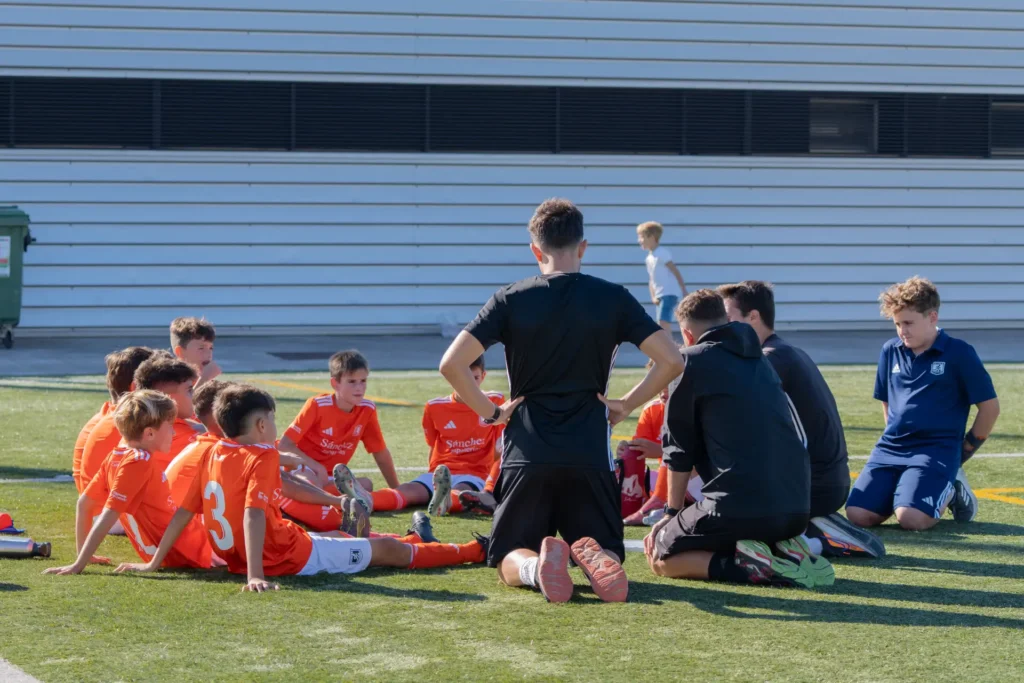
At Primer Toque CF International in Castellón, Spain, visiting players train alongside existing Spanish youth club teams and receive an assessment of their technical, tactical, and developmental needs.
The objective isn’t to promise a professional opportunity. It’s to give players an honest comparison against a different competitive standard and a clearer understanding of what to work on next.