
What North American players and parents need to know, from inside a Spanish club competing against Valencia CF, Villarreal CF, CD Castellon and Levante UD.
Almost every ambitious young player in North America has imagined it. You fly to Spain, England, or Germany, train with a club for a week or two, and impress a scout watching from the touchline. By the end of the trip, there’s an offer on the table.
It’s a powerful picture, and it’s not how soccer trials in Europe usually work.
European clubs don’t generally sign North American teenagers after a short visit. Getting seen, and then getting signed, is a process that can take years. It involves international regulations, family decisions, schooling, finding the right club, and learning a different game in a different language. All of this happens while competing against players who have spent much of their childhood developing inside the European football system.
Many families picture a pot of gold at the end of the rainbow: one great week, the right person watching, and a contract waiting at the end. The reality is that there usually isn’t an end of the rainbow to reach on a short trip. In European football, the road is built by living it, arriving, adapting, competing, and proving yourself season after season.
That doesn’t mean the road is closed. It means it’s longer, harder, and more specific than many families are led to believe.
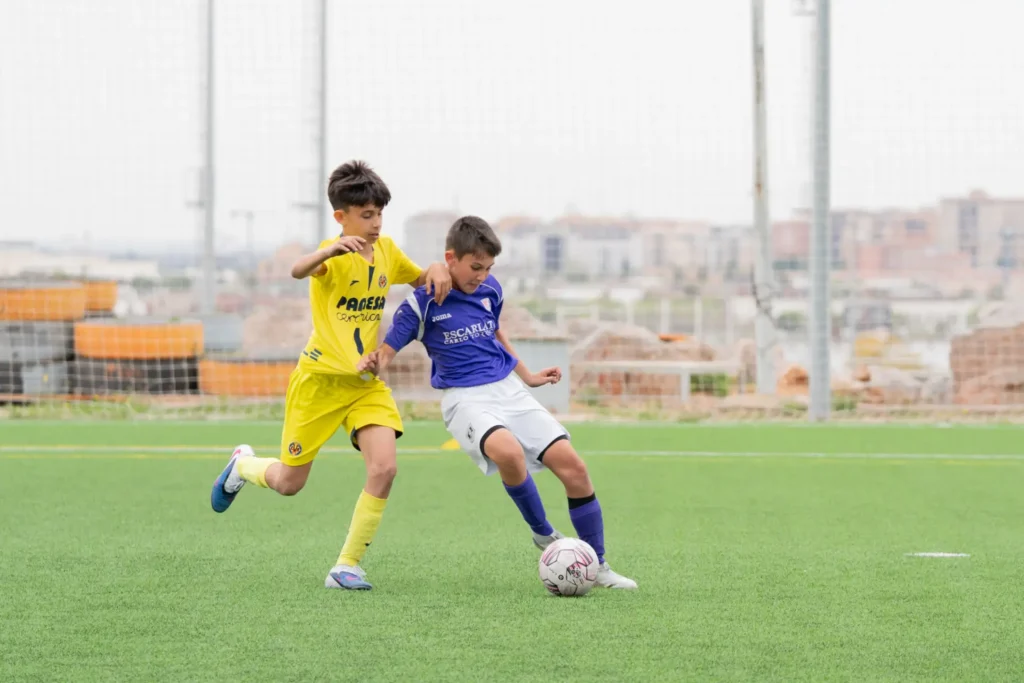
At Primer Toque CF International, we see this reality firsthand. Based in Castellón, Spain, our club competes within the Valencia regional football system, alongside established youth clubs and professional academies including Valencia CF, Villarreal CF, Levante UD, CD Castellón, and Elche CF. We see the standards young players are expected to meet, the competition they face, and how development happens over seasons rather than weeks.
That experience gives us a practical perspective on what it takes to compete in Spanish football, and why a short training visit should be viewed as an opportunity to understand your level, not a shortcut to a professional contract.
Can You Really Get Signed After a Soccer Trial in Europe?
It’s possible, but extremely uncommon for a North American youth player to receive a professional academy offer after one or two weeks of training. Clubs in Spain, England, and across Europe generally recruit players they’ve watched over an extended period, who are legally eligible to register, and who demonstrate qualities that justify selecting them over players already within their systems.
That isn’t a judgment about any individual player’s talent. It’s simply how professional recruitment works.
Why Does the One-Week Soccer Trial Myth Persist?
Three things help explain why families continue to believe that a short trip to Europe might lead directly to a professional contract.
1. Marketing and the promise of exposure
Many international programs advertise opportunities to get seen by European scouts because it’s an emotionally powerful proposition. For a young player dreaming of professional football, the possibility of being discovered can make almost any program sound worthwhile.
But exposure is a broad term. It might mean training with experienced coaches, attending a showcase, or participating in sessions where someone associated with a professional club is present. None of those activities necessarily represents an official recruitment opportunity.
2. Success stories without context
When a North American player joins a European professional club, the story is often presented as a breakthrough moment. What receives less attention is the player’s previous development, the years of competitive experience, the relationships involved, and the legal circumstances that made the move possible.
Christian Pulisic’s progression to Borussia Dortmund, for example, didn’t begin with an unknown player purchasing a European showcase. He was already an outstanding young prospect, and his Croatian citizenship was an important factor in his ability to move abroad before turning 18.
3. Confusion over what constitutes a trial
Soccer camps, showcases, club-based assessments, and official FIFA trials are different experiences, but they’re frequently marketed using similar language.
A family paying for a week of training with European coaches may believe their child is receiving a professional trial when the program is actually designed for development and evaluation.
That distinction matters because the expectations, regulations, and potential outcomes are very different.
What Does the Real European Soccer Recruitment Process Look Like?
Professional recruitment generally follows a structured sequence rather than depending on a single impressive performance.
- Identification: A scout or coach notices a player, usually through competitive matches or an established recruitment network.
- Repeated observation: The club watches the player again, often across several matches and against different opponents.
- Invitation to train: A selected player may be invited to participate in an official trial or further assessment.
- Evaluation over time: Coaches assess the player’s performance, tactical understanding, character, adaptability, and development potential.
- Eligibility and registration: The club establishes whether the player can legally be registered under FIFA and national federation rules.
A paid week in Europe generally sits outside that process. That doesn’t make it worthless, but it means it should be understood as preparation and measurement rather than recruitment.
For families, the distinction is important. A well-run international experience can help a player understand the competitive standard, identify development gaps, and recognize what improvement requires. Those are meaningful outcomes without needing to promise a contract.
How Do You Get Scouted by a European Soccer Club?
Players generally get scouted in Europe by performing consistently in competitive football, where professional clubs already operate recruitment networks. European clubs invest in identifying players they want rather than relying primarily on open tryouts.
The process begins with watching players in their normal competitive environments, often over months or years.
Why Do Professional Scouts Watch League Matches Instead of Showcases?
Professional clubs monitor local and regional youth competitions throughout the season because those matches provide a more reliable picture of player performance.
In Spain, youth soccer is organized through regional federations, where professional academies and established community clubs compete within structured leagues. These competitions give scouts regular opportunities to evaluate players in real match situations, observe their consistency, and track their development throughout the season.
A scout can observe how a player performs in a genuine match, against familiar and unfamiliar opponents, with competitive consequences. They can then return the following week and continue evaluating the same player.
That provides substantially more information than one appearance at a showcase.
A midfielder might perform well when their team dominates possession but struggle against an opponent that presses aggressively. A defender may appear comfortable in one match yet have difficulty handling faster forwards in another.
Repeated observations reveal whether a player’s strengths are consistent and whether those abilities translate into different situations.
How Do European Clubs Use Partner Networks to Find Talent?
Many professional clubs maintain relationships with community clubs that help identify and develop talented players.
Athletic Club offers one of the most distinctive examples. The Bilbao club has worked with a network of approximately 156 partner clubs to identify players within the Basque football environment, supporting its long-standing regional recruitment philosophy.
Real Sociedad also maintains close relationships with community clubs in Gipuzkoa. The club has historically emphasized patience in recruitment, avoiding formal assessments before age 10 and allowing promising players to continue developing locally before potentially joining its academy.
These relationships create a system in which promising young players may be known to professional recruitment departments long before they’re ready to sign anything.
Not every LaLiga club operates an identical model, but regional scouting networks and relationships with established youth clubs are important parts of Spanish talent identification.
How Do Video and Data Influence European Soccer Scouting?
Video and performance data have expanded the number of players professional clubs can monitor. Recruitment departments can review matches, identify promising prospects, and compare certain performance characteristics across competitions.
But at youth level, data doesn’t replace the importance of observing players in real situations.
Clubs still need to understand how young athletes make decisions, respond to pressure, behave without the ball, and adapt when matches become difficult.
Video can help identify a prospect. Repeated evaluation helps determine whether the player is worth pursuing.
How Do North American Players Get on European Scouts’ Radar?
North American players who attract genuine European recruitment interest are generally already performing at a strong competitive level at home.
Depending on the player’s age and location, that may involve MLS academies, MLS NEXT, USL development environments, elite provincial programs, youth national teams, or international competitions.
European clubs can monitor these environments through scouting contacts, tournament participation, video, and established professional networks.
Some clubs also operate affiliated academies in North America that organize selection opportunities. These programs can provide valuable development experiences, but selection into an affiliated academy isn’t necessarily a route into the parent club’s professional youth teams in Europe.
The broader lesson is that strong performances over time create recruitment interest. Purchasing a short international experience doesn’t automatically put a player into a professional scouting system.
Do European Professional Clubs Hold Open Soccer Trials?
Many professional clubs rely primarily on their scouting networks rather than open trials, although policies vary between organizations and age groups.
Chelsea FC states that its boys’ academy doesn’t operate open trials. Ajax also uses an established scouting and invitation process rather than accepting individual applications into its youth academy.
Other professional clubs may occasionally announce age-specific trial opportunities, but families should verify those directly through official channels.
Chelsea has also publicly warned about fraudulent accounts and organizations using its name to advertise nonexistent academy opportunities.
The important distinction is that professional clubs control their recruitment processes. Families should be cautious of third parties claiming they can secure access simply in exchange for payment.
What Do European Soccer Scouts Look for in a Player?
European scouts evaluate how a player thinks and performs within the game, including technical execution, tactical awareness, decision-making, character, and long-term potential.
Size, speed, and individual highlights can attract attention, but they don’t necessarily predict whether a player will succeed in a demanding academy environment.
What Does Research Say About Soccer Talent Identification?
European scouts evaluate how a player thinks and performs within the game, including technical execution, tactical awareness, decision-making, character, and long-term potential. Size, speed, and individual highlights can attract attention, but they don’t necessarily predict whether a player will succeed in a demanding academy environment.
Research supports this broader approach to talent identification. A 2022 study by Fuhre and colleagues, published in Sports, examined how academy coaches evaluate potential talent. Technical, tactical, and psychological qualities were considered particularly important, while physical measurements such as height and body size received less emphasis.
Together, these findings help explain why professional scouting is about far more than evaluating isolated skills.
What Does That Look Like on the Field?
In practical terms, European coaches and scouts may focus on the following qualities:
- Scanning and body orientation: Does the player check their surroundings before receiving possession and prepare their body to play effectively?
- Speed of decision-making: Can the player recognize when the ball needs to move quickly, rather than taking unnecessary touches?
- Technique under pressure: Can they control, pass, and protect the ball in tight spaces at match speed?
- Positional understanding: Do they recognize their responsibilities in relation to teammates, opponents, and available space?
- Behavior without the ball: Do they react immediately when possession changes, recover their position, and support the team’s organization?
- Character and coachability: How do they respond to mistakes, criticism, difficult sessions, or limited playing time?
- Long-term potential: What might the player become in three or five years, considering their maturity, age, and development history?
These are characteristics that can’t always be evaluated accurately during a short training session.
What Impresses Parents but Matters Less to Scouts?
Some of the moments that attract the most attention from spectators may carry less weight in a professional recruitment evaluation.
A player might score several goals during a small-sided game, demonstrate impressive individual skills, or dominate physically against smaller opponents.
Those actions can be positive, but scouts need to understand the context.
Physical dominance at 13 or 14 may partly reflect early maturation. A skillful dribble that slows down the attack may be less valuable than a simple pass that creates a scoring opportunity.
Likewise, a highlight video showing a player’s best moments doesn’t reveal how they behave during the other 80 minutes of a match.
Professional scouts are trying to understand how the player will perform within a demanding team environment over several years, not simply how impressive they looked during their best moments.
Can a North American Minor Legally Play for a Club in Europe?
In most circumstances, a North American player under 18 cannot simply move to Europe for soccer and register with a club unless their situation qualifies for a recognized exception under FIFA regulations.
This is one of the most important parts of the process for families to understand because it changes what is realistically possible.
FIFA’s Regulations on the Status and Transfer of Players restrict international transfers involving minors and certain first registrations. National federations, including Spain’s RFEF, are responsible for applying those requirements.
FIFA published updated guidance on minor applications in February 2026, reinforcing the protections established under Article 19.
The information below is general guidance rather than legal advice. Families should confirm their specific circumstances with the appropriate federation or a qualified professional.
What Is FIFA Article 19?
Article 19 was established to protect young players from being moved internationally for football under circumstances that could expose them to exploitation or inappropriate recruitment.
The regulations generally prohibit international transfers before age 18 unless a narrowly defined exception applies.
Spain’s football federation follows these rules when considering the registration of international minors.
A talented 15-year-old from Toronto, Dallas, or Vancouver therefore can’t simply travel to Spain alone and become officially registered with a club.
Even if a coach believes the player has significant potential, the club still needs to satisfy the regulatory requirements.
What Exceptions Allow Minors to Register Abroad?
FIFA recognizes several specific circumstances that may permit international transfers or registrations involving minors.
Parents relocating for non-football reasons
A player’s parents may move to another country for genuine reasons unrelated to football, such as employment or other family circumstances. The relocation must satisfy the applicable requirements, and authorities may examine whether football was actually the reason for the move.
Certain transfers within the EU or EEA
Players aged 16 or 17 may qualify for specified transfers within the EU/EEA, subject to conditions involving education, accommodation, and football development.
Cross-border residence
Players living near an international border may qualify to register with a club across that border under strict distance and residence requirements.
Five years of continuous residence
Certain minors who have lived continuously in a country for at least five years may qualify for registration under the relevant provisions.
Humanitarian circumstances
Specific exceptions exist for eligible minors who have left their home countries for humanitarian reasons.
Recognized educational exchanges
Limited provisions may apply to certain temporary academic exchange arrangements, subject to their specific conditions.
These exceptions aren’t automatic. Each situation requires the appropriate documentation and review.
Does a Student Visa Allow a Young Player to Compete in Europe?
A student visa or residence permit may allow a player to live and study in a European country, but it doesn’t automatically establish eligibility to participate in official federation soccer.
Immigration permission and football registration are separate matters.
This distinction explains why international players may be able to train with European club teams while remaining ineligible for official league matches.
For example, a visiting player could participate in appropriate training sessions and permitted friendly matches without becoming a registered member of the club’s competitive squad.
Families should understand these limitations before committing to a long-term international program.
What Are FIFA’s Rules for Official Soccer Trials?
FIFA also regulates the trials themselves.
Under its trial framework, official international trials involving minors are subject to specific age restrictions, documentation, and player welfare requirements.
The principal conditions include:
- Age: A minor generally becomes eligible for an international trial during the season of their 16th birthday. A limited exception permits certain trials from the season of the 15th birthday when both the player and club are based within UEFA.
- Documentation: The trial must be formally recorded, and minors require written parental consent.
- Payment: Clubs and intermediaries cannot charge a player for access to an official trial.
- Medical care: The club must cover appropriate medical treatment if the player is injured during the trial.
- Duration: The maximum trial period for players aged 21 or younger is eight weeks per club per season.
- Participation: Trialists are limited to permitted training activities and friendly matches rather than official league competition.
FIFPRO provides a useful explanation of these requirements in its guidance for players considering trials abroad.
This is an important distinction for parents.
If a family is paying to participate in a European soccer experience, it shouldn’t automatically be described as an official FIFA trial. It may be a legitimate camp, development program, or player assessment, but those experiences serve different purposes.
What Changes When a Player Turns 18?
Turning 18 removes the general FIFA restrictions on international transfers of minors, but it doesn’t remove every obstacle.
Players still need to satisfy registration, immigration, employment, and competition requirements.
Some European leagues also limit the number of players who occupy non-EU roster places. At the highest professional levels, competition for those places can be significant.
European citizenship may provide advantages under certain regulations, but it doesn’t change the standard of football required to compete.
For North American players approaching adulthood, the realistic question becomes whether they possess the ability to earn a place within a competitive professional environment.
Are the Rules Different in England, Germany, or Portugal?
FIFA’s framework applies internationally, although individual countries may have additional domestic regulations.
England’s position also differs from EU countries following Brexit. The EU/EEA exception available for certain youth transfers doesn’t apply in the same way to English clubs.
Germany, Portugal, Spain, and the Netherlands operate within the FIFA framework while applying their respective national requirements.
Changing countries doesn’t remove the underlying restrictions on international transfers involving minors.
Does Your Family Need to Move to Europe for Your Child to Play Soccer?
For many young players pursuing a long-term European pathway, family relocation is a significant consideration.
A genuine parental move for reasons unrelated to football may be relevant to FIFA eligibility, but moving abroad isn’t automatically sufficient for a player to register.
And even where the legal requirements can be satisfied, the developmental process usually involves spending considerable time within the club’s environment.
This is the point where the conversation stops being only about soccer and becomes a discussion about family life.
What Does Moving to Europe Actually Involve?
Relocating involves decisions that extend well beyond training and competition.
Employment and residency: A parent needs a legitimate basis to live and, where relevant, work in the destination country. Any proposed reliance on FIFA’s parental relocation exception must satisfy the applicable requirements.
Housing and finances: Families must consider accommodation, living expenses, transportation, healthcare, and the cost of maintaining a household abroad.
Siblings and family relationships: Brothers and sisters may need to change schools, leave friends, and adapt to a new language. Some families may also face the possibility of living apart for extended periods.
Education: A young player needs to continue their academic development while adjusting to the demands of competitive football.
Long-term uncertainty: Even a player who adapts successfully may never receive a professional opportunity.
For parents, one question is particularly important:
Would our family still be glad we made this move if football doesn’t work out?
If the answer is yes because of the education, cultural experience, language, and opportunities available to the family, relocation may make sense on broader terms.
If the decision only makes sense when the player receives a professional contract, the financial and emotional risk is substantial.
What If Your Family Can’t Relocate?
Not every family can relocate internationally, and that doesn’t mean a young player’s ambitions need to end.
There are several realistic alternatives.
Players can continue developing within the strongest appropriate environment available at home, including established academies, elite regional competitions, and national development programs.
Short-term European training experiences can also provide useful benchmarks without requiring a permanent move. A player can experience a different standard, receive feedback, and return home with clearer priorities for improvement.
As they become older, other possibilities may emerge. Official club trials become available under specific conditions, while adult pathways may include domestic professional soccer, college competition, or opportunities abroad.
The important thing is to develop within a strong environment rather than pursuing international opportunities simply because they’re international.
What About School, Visas, and Everyday Life in Europe?
School is a central part of any international move involving a minor, not something to organize after the football arrangements have been made.
A young player living in Spain or elsewhere in Europe needs an appropriate educational environment, and that decision can influence language development, academic progress, friendships, and future opportunities.
Should a Young Player Attend a Local or International School?
Families considering a move to Spain generally evaluate local Spanish schools and international or bilingual education options.
A local school provides greater immersion in Spanish language and culture. That can also accelerate communication and integration on the field, although the first academic year may be challenging for a student still learning the language.
An international or bilingual school may offer greater continuity with a North American curriculum while providing a different level of cultural immersion.
Families should also consider how credits and qualifications will transfer if the player returns home, particularly when future university or college soccer opportunities remain part of the plan.
What Visas and Residence Documents Are Required?
Longer stays may require a national visa, residence authorization, or other immigration documentation depending on the player’s nationality and circumstances.
For minors, requirements can involve parental authorization, proof of schooling, accommodation arrangements, financial documentation, health insurance, and identification of a responsible adult.
The exact requirements vary by country, visa category, and consular jurisdiction.
Families should verify them with the relevant consulate or immigration authority before making commitments.
A legal right to live or study in a country also shouldn’t be confused with eligibility to register for official football competition.
What Is Everyday Life Like for a Young Player in Europe?
A typical week for a young player in Spain may involve school during the day, training in the evening, and competitive matches at the weekend.
But the schedule is only part of the adjustment.
Players must also navigate a different language, unfamiliar food and routines, new friendships, and the pressure of competing for a place in an established team.
They may find themselves outside the starting lineup for the first time in their lives or struggle to communicate with coaches as naturally as local teammates.
Football is one part of a much larger change.
Families need to evaluate whether the player is prepared for that experience, not simply whether they’re talented enough to train.
How Do You Get Into the Right European Soccer Club and Move Up?
Players generally begin within a club and competitive environment that matches their current ability, then progress by demonstrating consistent performance over time.
In Spain, that may involve starting with an established community club or a development team before attracting interest from a stronger organization.
The process isn’t always straightforward, and opportunities depend on performance, development, eligibility, and club needs.
The Spanish football system is better understood as a ladder than an elevator. Players usually need to earn each step.
How Is Spanish Youth Football Structured?
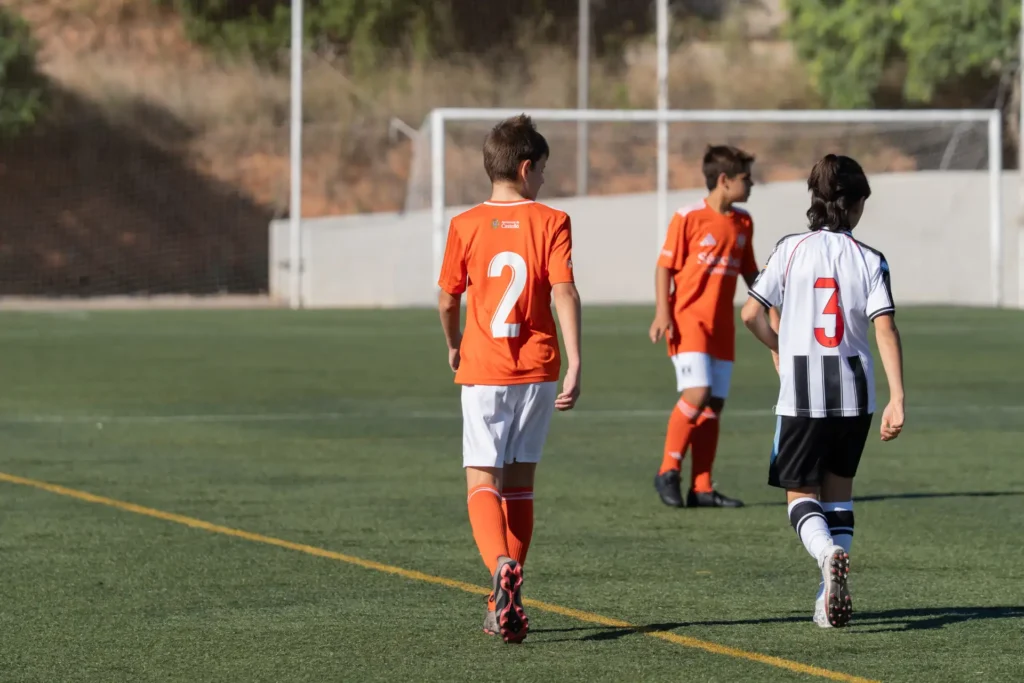
Spanish youth football progresses through established age categories, including Alevín, Infantil, Cadete, and Juvenil.
Many clubs operate multiple teams within an age group, often competing in different divisions based on their competitive level.
At the highest youth level, the División de Honor Juvenil represents Spain’s leading national under-19 competition.
Professional clubs also operate reserve teams that can compete within the senior league structure, providing an additional development stage before first-team football.
How Do Players Progress Between Spanish Clubs?
Movement generally occurs through performance in competitive football.
Scouts and coaches observe federation matches throughout the season. Players who demonstrate the qualities required at higher levels may attract attention from stronger clubs.
For an international player, the realistic first challenge is often adapting to a team and proving they can compete consistently at that level.
Only then does it make sense to evaluate whether the player is ready for stronger opposition.
That progression takes time and depends on more than one good performance.
Why Does Choosing the Right First Club Matter More Than the Biggest Name?
A famous badge can be appealing, but playing time, coaching quality, and an appropriate competitive environment are often more important for development.
A player who starts regularly within a well-coached team has opportunities to apply skills under pressure, learn from mistakes, and improve through competition.
Someone who rarely plays for a more prestigious organization may have fewer opportunities to develop those abilities.
For international players, the right first environment should provide a realistic challenge and an opportunity to progress.
The objective isn’t simply to join the biggest club possible.
It’s to enter a development environment where the player can compete, learn, and demonstrate improvement.
How Long Does It Take to Adapt to European Football?
Adapting to European football can take months, while becoming fully comfortable within a club’s development methodology may require years.
That’s true even for talented players.
A young athlete may possess excellent technical skills and still struggle with unfamiliar tactical instructions, faster decisions, or the intensity of competition.
The adjustment also involves language, relationships, expectations, and the psychological challenges of entering a new environment.
Why Does Learning a European Club’s Methodology Take Time?
Spanish academies often introduce consistent playing principles from the youngest age groups.
Players develop an understanding of positional references, passing patterns, defensive organization, and coaching terminology through years of training and competition.
A visiting 14- or 15-year-old may understand the individual exercises but still struggle to recognize situations that local teammates identify almost automatically.
That recognition comes through repetition.
A player who is still interpreting an instruction or trying to identify the correct position may make a decision slightly late.
And at higher levels, late decisions often look like poor decisions.
This is one reason first impressions of international players can be misleading.
How Big Is the Gap Between Youth and Professional Soccer?
The difference between competitive levels isn’t simply the distance players cover during matches.
Research suggests that intensity can be an important distinguishing factor.
A 2021 study by Reynolds and colleagues, published in Frontiers in Physiology, compared match demands among U18, U23, and first-team players at an English professional club.
The researchers found that total distance covered was relatively similar, ranging from approximately 10,052 to 10,259 meters per match across the groups.
The differences became more apparent when examining high-intensity actions.
U18 players averaged approximately 110 meters of sprinting per match, compared with 142 meters for U23 players and 144 meters for first-team players. Older players also performed more high-intensity bursts.
The study involved one club, so its findings shouldn’t be generalized to every professional environment. But it illustrates how progression can demand greater intensity even when overall running distance changes relatively little.
For an international player, the adjustment may involve several connected challenges: less time on the ball, more decisions in every action, stronger physical demands, unfamiliar tactical expectations, and the pressure of competing within a new team.
What Does Research Say About Young Players Moving Abroad?
The psychological demands of international football can be significant.
A 2024 study commissioned by the Finnish Players’ Association examined the experiences of 25 young players who had moved abroad to international academies.
The findings were sobering:
- 80% reported experiencing mental fatigue, anxiety, or depression during their academy experience.
- 72% felt they hadn’t received adequate information or preparation before moving.
- 72% reported that their confidence had been negatively affected.
- 52% identified limited playing time as a significant challenge.
The study involved a relatively small group, so its findings shouldn’t be interpreted as rates for all young players who move abroad. Still, the experiences highlight the importance of preparing families for the challenges of international football.
These weren’t simply children attending recreational camps. They were players who had entered international academy environments.
For parents considering a longer-term move, the findings reinforce why education, mental health, family support, and realistic expectations need to be part of the decision.
Why Does Language Matter So Much?
In Spain, coaching instructions are generally delivered in Spanish, often quickly and during active play. Teammates also communicate constantly to organize positioning, pressing, and passing options.
A player who doesn’t understand those instructions may be a step behind, even when they have the technical ability to execute the correct action.
For short-term development programs, demonstrations and basic vocabulary can help bridge that gap.
For a player planning to live and compete in Spain over several seasons, language becomes part of learning the game.
Why Would a European Club Choose Your Child Over Local Players?
This is one of the most important questions a family can ask.
A European professional club already has access to talented young players within its existing development system. Those players may have spent years learning the club’s methodology, competing within regional leagues, and being evaluated by academy staff.
An international player needs to demonstrate qualities that justify the additional complexity of recruitment.
Being one of the strongest players on a local North American team is an achievement, but it doesn’t automatically mean the player is ready to compete for a place in a European professional academy.
How Many Players Are Already Developing in Europe?
Spain alone has an extensive competitive football structure.
According to the Spanish government’s 2025 statistics on federated sport, the country recorded approximately 1,277,345 football licences, including more than 1.15 million held by male participants.
That represents a large domestic population of players developing through established clubs and competitions.
Across Europe, millions more participate in organized football.
For an international player entering this environment, the challenge isn’t simply demonstrating that they’re talented.
It’s showing that they can compete against players who have spent years developing within the same system.
What Does Six Years in a European Academy Mean?
By age 14, many academy players have already spent six or more years training within structured development environments.
They may have learned positional principles, passing patterns, tactical responsibilities, and coaching language from an early age.
Those concepts become familiar through thousands of repetitions.
An international player joining at 14 or 15 may need time to understand the same expectations, even if their individual technical ability is strong.
This is why short training visits can reveal important differences between a player’s current habits and those of local academy players.
Why Is Recruiting a Foreign Player More Complicated?
For a European club, bringing in an international player can involve additional considerations:
- Legal eligibility and registration.
- Residency and immigration requirements.
- Language and cultural adaptation.
- Time needed to learn the club’s methodology.
- Competition for existing squad places.
- Additional roster restrictions at certain senior levels.
A club will generally need convincing sporting reasons to take on that complexity.
The standard isn’t whether a player can perform well for a few days.
It’s whether the player offers sufficient ability and long-term potential to justify the commitment.
Why Can Physical Maturity Create Misleading Impressions?
Physical development can strongly influence how young players perform and how they’re evaluated.
A 2024 University of Essex study followed 198 players from two professional academies in Madrid over approximately ten years.
The researchers found that 44% of the original academy players were born during the first three months of the calendar year. None of the players who eventually reached professional football had been born during the final three months.
The findings highlight the relative age effect and the potential influence of physical maturity on youth selection.
An early-maturing player may appear more advanced during a short visit because they’re physically stronger than their peers.
A later-developing player may appear further behind.
Neither impression necessarily provides an accurate picture of long-term potential.
What Does Exceptional Talent Really Mean?
Exceptional doesn’t simply mean being the best player on a local team.
It means demonstrating qualities that stand out consistently within demanding competitive environments and continuing to perform as the level increases.
Professional clubs are trying to identify players who can eventually compete within their own academy or senior structures.
That requires more than individual talent.
It requires consistency, adaptability, psychological resilience, technical quality, and the ability to continue improving.
Some international players will demonstrate those qualities. Most won’t ultimately become professionals, which reflects the highly selective nature of the sport.
How Hard Is It to Become a Professional Soccer Player From North America?
It’s extremely difficult, and the odds remain challenging even for young players already enrolled in elite European academies.
That reality applies regardless of where a player comes from.
Professional soccer involves intense competition, limited squad places, continuous evaluation, and years of development.
What Happens to Players Already Inside Professional Academies?
The same University of Essex study examining 198 Madrid academy players found that approximately 6% progressed into full-time professional football, while around 4% reached Spain’s highest professional league.
These players had already been selected into professional academy systems and had access to high-level coaching, competition, and development resources.
The researchers also identified characteristics associated with professional progression, including self-confidence, ball reception, dribbling, and strong coaching assessments of technical ability.
These statistics shouldn’t be applied directly to international soccer camp participants. They describe a specific group of players already selected into professional academies.
But they demonstrate just how competitive the pathway is.
How Strong Is the Competition From European Academies?
European clubs have extensive experience developing talented young players.
Research from the CIES Football Observatory has repeatedly identified clubs such as Barcelona, Real Madrid, Athletic Club, Real Sociedad, and Villarreal among important producers of professional footballers.
Spain’s 2026 World Cup-winning squad also demonstrated the depth of the country’s academy system, with players developed across several different professional clubs.
For a North American player considering Europe, the important point isn’t that the opportunity is impossible.
It’s that the competition is already extremely strong.
Is Pursuing High-Level Soccer Still Worthwhile?
Yes, when the player and family understand what the experience involves.
Many athletes who never become professionals benefit from challenging development environments.
They may improve their abilities, develop independence, pursue college opportunities, compete at semi-professional levels, or eventually become coaches.
The experience can be valuable without resulting in a professional contract.
The goal should be clear before the journey begins.
What Can Soccer Trials in Spain Actually Tell You?
A short trial or development assessment can help a player understand how their current abilities compare with the demands of a Spanish club environment.
It can reveal how they respond to a different coaching methodology, unfamiliar teammates, faster decision-making, and increased tactical expectations.
What it can’t reliably determine is whether the player will eventually become a professional.
For younger international players, this distinction is especially important.
What Can a Well-Run Trial or Player Assessment Reveal?
A meaningful evaluation can provide information in several areas.
Current level: How do the player’s technical ability, decision-making, and physical readiness compare with players of a similar age?
Response to tempo: Does the player begin adapting after several sessions, or do the demands remain difficult throughout the experience?
Coachability: How does the player respond to unfamiliar instructions, correction, and challenging situations?
Strengths and development gaps: Which abilities translate effectively into the new environment, and which require improvement?
Motivation: Does the player genuinely enjoy the daily demands of the environment, or are they primarily attracted to the idea of playing in Europe?
That final question can be particularly valuable.
A player may dream about joining a European club without fully understanding what the daily experience involves.
A short visit can help them discover whether they enjoy those demands.
What Can’t a Short European Soccer Assessment Tell You?
A one-week experience has important limitations.
It can’t reliably predict professional potential, determine how a player would perform after several months of adaptation, or fully account for differences in physical maturation.
Travel fatigue, unfamiliar teammates, language barriers, and the pressure of entering a new environment can also affect performance.
For visiting minors, participation in official federation competition may be restricted by eligibility regulations.
These factors mean an assessment should be interpreted as a snapshot of the player’s current abilities rather than a definitive judgment about their future.
What’s the Difference Between Camps, Showcases, Assessments, and Official Trials?
Families should understand the purpose of each program before committing.
Soccer camps and clinics generally provide structured coaching within temporary groups. They can offer valuable learning experiences but aren’t necessarily designed to evaluate individual competitive readiness.
Scouting showcases typically involve matches or exercises advertised as opportunities to perform in front of recruiters. Families should verify who will attend, their responsibilities, and whether any legitimate recruitment process is involved.
Club-based assessments allow players to train within an established club environment and receive feedback about their current abilities.
Official FIFA trials are conducted under specific regulations involving the club, player eligibility, documentation, supervision, and participation requirements.
These experiences aren’t interchangeable.
A family seeking an honest benchmark may benefit more from a structured assessment than from a showcase built primarily around the possibility of being noticed.
How Does Primer Toque CF International’s Player Assessment Work?
At Primer Toque CF International, the Player Assessment follows the club-based development and evaluation format.
Over one week, a maximum of four international players train within appropriate existing club teams, generally beginning within a B-team environment.
The purpose is to experience the expectations of Spanish youth football, understand how the player responds, and identify specific areas for improvement.
Because of registration restrictions, visiting players don’t participate in official federation league matches unless independently eligible and properly registered.
Each player receives a written evaluation and development roadmap.
It’s designed to provide an honest benchmark, not a promise of a professional contract.
For a family trying to understand whether their child is ready for a more demanding environment, that information can be more useful than an unverified scouting opportunity.
How Can Players Get the Most From a Short European Training Experience?
Preparation can improve the quality of the experience.
Players should arrive sufficiently rested, familiarize themselves with basic soccer vocabulary in the local language, and understand what they want to learn.
During the program, they should focus on adapting rather than trying to impress coaches with every action.
Afterward, they should ask for two or three specific development priorities and use those recommendations within their regular training.
For some players, returning six or twelve months later for another assessment can provide a useful way to evaluate progress.
The objective is to use the international experience as part of a longer development process.
How Do You Spot False Promises Around Soccer Trials in Europe?
Any promise of a contract, signing, or guaranteed professional scouting opportunity in exchange for money should be treated with caution.
Legitimate clubs don’t sell professional selection, and FIFA regulations prohibit payments connected to arranging official trials.
Unfortunately, international football attracts individuals and organizations willing to exploit the ambitions of young players.
What Do Soccer Trial Scams Actually Look Like?
FIFPRO, the global players’ union, has documented problems involving fake agents and misleading promises about professional trials.
In a survey of 263 players from seven African countries, FIFPRO found that among players who had been approached about opportunities:
- 56% didn’t receive the trial they’d been promised.
- 44% didn’t sign the contract they’d expected.
- 78% reported that at least one aspect of the arrangement hadn’t been properly delivered.
These findings concern the surveyed players and shouldn’t be generalized to all European soccer programs. They do, though, illustrate the risks associated with unverified recruitment offers.
Spain hasn’t been immune to these problems.
In 2023, Spanish media reported an alleged fraud involving football schools in Andalusia that had charged international families substantial amounts while promising academy opportunities and professional exposure that failed to materialize.
Chelsea FC and England’s Football Association have also warned families about fraudulent recruitment communications using professional club names.
What Are the Warning Signs Parents Should Recognize?
Common warning signs include:
- Guaranteed professional trials, contracts, or academy placements.
- Requests to pay an individual for access to an official club trial.
- Pressure to transfer money quickly.
- Vague claims that professional scouts will attend without identifying names or responsibilities.
- No clear explanation of FIFA’s regulations concerning minors.
- Promises that visiting players will participate in official league matches without establishing eligibility.
- Missing information about coaching staff, accommodation, or safeguarding.
- Testimonials and success stories that can’t be independently verified.
Some programs may be legitimate development experiences but use marketing that creates unrealistic expectations.
That’s why families should look beyond promotional language and understand exactly what they’re purchasing.
What Questions Should Parents Ask Before Registering?
Before committing to a European soccer program, families should ask:
- Which club and teams will my child train with, and at what competitive level?
- Who are the coaches, and what qualifications do they hold?
- Is this an official FIFA trial or a paid training and assessment program?
- Will my child receive a written evaluation?
- Can my child participate in official matches, and what eligibility requirements apply?
- Who supervises participants outside training, and where will they stay?
- What is included in the price, and what costs extra?
- Can the organizer provide verifiable references from previous participating families?
A credible program should be able to answer these questions clearly.
The strongest organizations don’t need to promise professional contracts to explain the value of their development experiences.
What’s the Right First Step Toward Playing Soccer in Europe?
The right first step is to establish the player’s goals honestly and understand their current competitive level before making a long-term commitment.
A family considering a European soccer experience should distinguish between three different objectives: pursuing a possible professional pathway, obtaining a meaningful development benchmark, or experiencing a different soccer culture.
Each requires a different approach.
A Practical Decision Framework for Families
1. Define the Goal
Is the player hoping to pursue professional football, improve their abilities, or experience the game in another country? Understanding the objective helps determine which opportunities are appropriate.
2. Be Honest About Readiness
Is the player already competing successfully within a demanding domestic environment? Do they respond well to coaching and difficult competition? Are they motivated by the everyday work required to improve?
3. Understand the Legal Requirements
Before considering official academy registration or a longer-term move, establish how FIFA’s regulations apply to the player’s age and circumstances.
4. Choose the Right Experience
A camp can provide coaching and cultural exposure. A club-based assessment can offer a development benchmark. A genuine long-term pathway may require several seasons of competition and significant family commitments.
5. Test the Environment
Before making decisions about relocation or extended programs, understand how the player responds to European training methods, tactical demands, and competition.
6. Think in Seasons, Not Weeks
If the objective is long-term development in Europe, consider education, housing, language, supervision, finances, and the time required to adapt.
7. Measure Progress Rather Than Promises
Evaluate an experience based on the quality of coaching, feedback, competition, and the player’s development rather than claims about what might happen afterward.
This is where a structured player assessment can be particularly useful.
It allows families to experience the environment and make future decisions based on more meaningful information.
Frequently Asked Questions About Soccer Trials in Europe
Can American or Canadian Players Try Out for Clubs in Spain or Europe?
Yes, but the nature of the opportunity matters. Official international trials involving minors are subject to FIFA age restrictions and documentation requirements. Paid camps and player assessments are different from official professional trials.
Can a 14- or 15-Year-Old Move to Spain or England Alone to Join an Academy?
Generally, a minor can’t simply move abroad for football and become officially registered with a professional academy. FIFA Article 19 restricts international transfers and certain first registrations, subject to narrowly defined exceptions. A student visa alone doesn’t establish football eligibility.
Do Professional Scouts Attend Paid Soccer Showcases?
Some showcases advertise attendance by professional scouts, but families should verify who will attend and what recruitment responsibilities they have. Professional clubs generally rely on established scouting networks and repeated evaluation rather than treating paid showcases as guaranteed recruitment pathways.
How Do You Get Scouted in Europe From North America?
The most realistic route is to perform consistently within a strong competitive environment at home, whether through elite youth clubs, professional development systems, national programs, or international competition. European clubs use scouting networks, video, and established contacts to identify promising players.
What Is the Best Age to Go to Europe for Soccer?
It depends on the objective. Short-term training and development assessments may be valuable for appropriately prepared younger players, while official international trials involving minors are subject to FIFA age restrictions. Adult pathways generally become more accessible from age 18, although other eligibility requirements remain.
Does Having an EU Passport Help?
European citizenship may provide advantages under certain transfer and registration regulations, particularly within the EU/EEA. It doesn’t automatically guarantee eligibility or a club opportunity, and it doesn’t change the level of football required.
How Much Do Soccer Trials in Europe Cost?
FIFA prohibits clubs and intermediaries from charging players for access to official trials. Paid camps, development programs, and club-based assessments are separate services, with costs varying according to coaching, accommodation, competition, and included activities.
Is It Better to Play College Soccer or Go to Europe?
That depends on the player’s age, current level, education, and long-term objectives. College soccer can provide valuable competition and academic opportunities, while other players may pursue professional pathways at home or abroad. The best option is the one that matches the player’s circumstances and development needs.
How Long Does It Take to Adapt to Football in Spain?
Adaptation varies, but it can take several months to become comfortable within a new environment. Learning a different coaching methodology, improving language skills, and competing within an unfamiliar team structure may take considerably longer.
The Truth Is Harder, and More Useful
Getting seen in Europe isn’t a moment. It’s a process that unfolds over years, and Spain’s competitive youth football structure helps explain why.
The rules protect minors from being moved across borders for football. Families must make real decisions about where they live, how their children are educated, and what they’re prepared to commit. Players need to adapt to different coaching methods, unfamiliar tactical demands, and sometimes a new language while competing against young athletes who have grown up inside the system.
None of that makes the dream impossible.
Some North American players will have the talent, character, circumstances, and support required to build careers in European football.
But it rarely comes from finding the right week or the right person standing on the touchline. It comes from developing consistently, entering the appropriate environment, adapting to its demands, and proving yourself over time.
For families considering soccer trials in Europe, the most valuable first step isn’t chasing a promise.
It’s getting an honest answer about where the player stands.
Find Out Where Your Player Stands
If you want an honest answer to the question, Could my child compete at this level?, a meaningful evaluation inside an established Spanish club can provide a useful starting point.
Primer Toque CF International’s Player Assessment places international players within appropriate existing teams at a competitive youth club in Castellón, within Spain’s Valencia region.
Players experience the speed, intensity, and tactical expectations of Spanish youth football while receiving a written evaluation and development roadmap.
The goal isn’t to promise a professional contract. It’s to help players and families understand their current level, identify what needs to improve, and make better decisions about what comes next.
Experience the standard. Get honest feedback. Decide from evidence.
Explore the Primer Toque CF International Player and Team Assessment program.