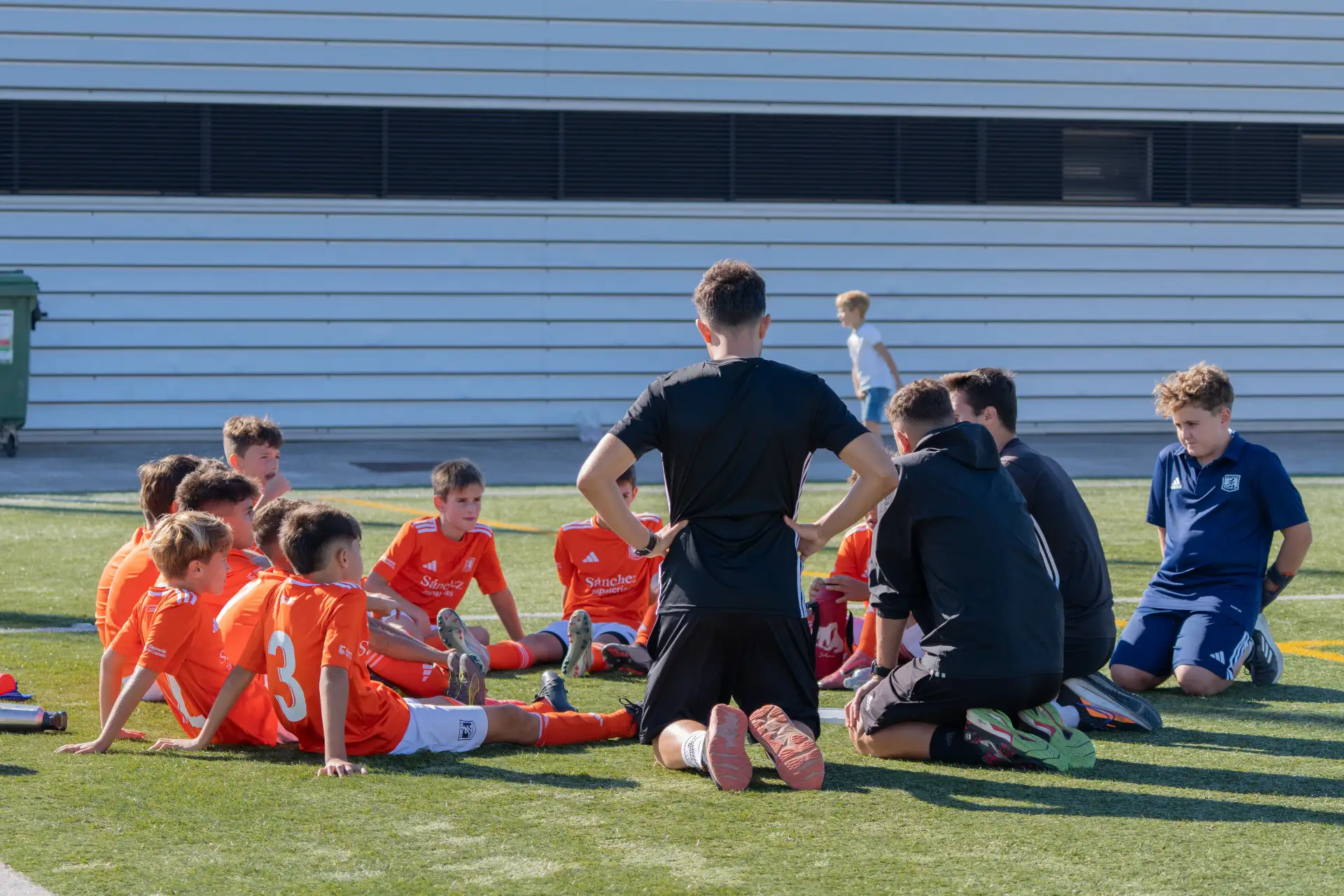
If you’ve started looking at soccer camps in Europe, you’ve probably noticed how similar they all sound. Famous club badges, world-class facilities, professional coaches, and the opportunity to experience European football.
It’s exciting, and it should be. But there’s something important that isn’t always clear from the website: Who will your child actually be training with?
There’s a big difference between attending a camp at a famous European club and stepping onto the field with players who represent that club every weekend. Both can be valuable experiences, but they’re not the same thing.
And before spending money on either, it’s worth understanding exactly what you’re getting.
What Types of European Soccer Programs Are Available?
Most opportunities fall into three categories, although individual programs may combine elements of each.
Soccer camps: Usually lasting one or two weeks, these programs bring international players together for training, games, and a memorable football experience. Some operate under famous professional club brands and use coaches associated with those clubs. However, participants typically train with other campers, not the club’s regular academy players.
International academy programs: These are longer experiences, sometimes lasting an entire season. They may include accommodation, schooling, professional coaching, and organized competition. But here’s the distinction: some operate separate international teams rather than placing visiting players into the club’s established academy squads.
Club team immersion: This is different. Visiting players join existing youth teams for their regular training sessions, alongside local players who compete together every weekend. The coaches, teammates, and training environment are already established. The visiting player steps into that environment rather than having one created around them.
None of these options is automatically better. It depends on what your player wants to accomplish.
Does Training at a Famous European Club Mean Training With Its Actual Players?
Not necessarily. And this is probably the most important question families should ask.
A program might advertise training at a professional club’s facilities, coaching from academy staff, or access to the club’s methodology. All of those things can be legitimate benefits.
But they don’t necessarily mean your child will train alongside the players who represent that club in regular competition.
For a serious player, that distinction matters. Joining an established team means entering a group that already knows how to play together. The tempo, expectations, communication, and competition for places are unfamiliar. Your player has to adjust rather than having the training adapted entirely around visiting participants.
These opportunities are less common because clubs have their own players to develop and matches to prepare for. Introducing international visitors requires appropriate placement and coordination with the team’s coaches.
Before booking, ask whether your child will train with other international visitors or with the club’s established players. If the program promises academy integration, find out how many sessions that actually includes.
One session with a local team is very different from spending a full week inside its normal training schedule.
Why Does the Time of Year Matter?
Most European soccer camps operate during the summer, when regular youth football seasons have finished. In Spain, competitive club seasons generally run from September through May.
If you visit in July, the youth team your child hopes to train with may not be training at all.
That’s why genuine club immersion typically happens during the season, which can create challenges for North American families balancing school schedules.
There’s also a difference between training and playing competitive matches. Visiting minors may be able to train and participate in permitted friendlies, but playing official league matches generally requires registration and eligibility approvals under FIFA’s regulations.
Families should understand those limitations before committing to a program.
What Should Parents Look for Before Choosing a Program?
Start with your child’s goals rather than the club’s reputation.
If your player wants an unforgettable week of soccer, professional coaching, new friends, and the experience of wearing a famous European badge, a well-run camp may be perfect.
If they’re considering several months abroad, an international academy program might offer the longer-term training environment they’re looking for. But parents should investigate the football and education arrangements carefully. Is the player training with a dedicated international squad? Attending a Spanish school? Completing accredited online coursework? What happens to their academic credits when they return home?
If your player wants to understand where they stand against Spanish players of the same age, training inside an established club team may provide a more useful benchmark.
The point isn’t to find the most impressive program. It’s to find the experience that matches your player’s ambitions.
What About North American Clubs Bringing Teams to Europe?
For club directors, there’s another question worth considering: Are you organizing a European soccer trip, or building a relationship that creates genuine development opportunities for your players?
A traditional soccer tour can offer excellent competition, professional coaching, and an unforgettable experience. There’s real value in that.
But if your club’s objective is long-term development, consider what happens after the trip.
Does the relationship continue? Can your coaches exchange ideas with their European counterparts? Can players return for individual evaluations? Is there a clear understanding of the competitive standards and potential next steps?
A genuine club partnership should create opportunities that extend beyond a single visit.
An international trip isn’t automatically a development pathway, and a partnership isn’t a pathway simply because two clubs have agreed to work together.
Is Training Inside a European Club Worth the Money?
That depends on what you’re hoping to get back.
Some families spend thousands of euros on short European experiences. Longer residential programs can involve substantially greater commitments, particularly when accommodation and schooling are included.
But price alone doesn’t tell you much about the quality of the experience.
A camp might deliver exactly what a younger player needs: enjoyment, confidence, and exposure to different coaching. A residential academy might provide valuable development over several months.
For a competitive player seeking an honest comparison, training with an established club team can offer something different: a chance to experience another standard and understand what needs to improve.
That doesn’t mean a week of training will transform a player or predict their professional future. But it can provide perspective that helps guide the next stage of development.
The real question isn’t how much you’re spending. It’s what your player is actually getting in return.
So Which Experience Is Right for Your Player?
Before choosing a European soccer program, ask yourself two questions.
Who will my child actually train with? And what do we want them to take away from the experience?
The answers matter far more than the name on the shirt.
Experience Training Inside a Spanish Youth Club
At Primer Toque CF International in Castellón, visiting players train alongside existing Primer Toque youth teams during the regular season, rather than in a separate international camp group.
Players are matched to an appropriate age and competitive level, experience the club’s normal training environment, and receive a written assessment identifying their strengths, development needs, and next steps.
For visiting teams, Primer Toque also offers opportunities to experience Spanish coaching and competition within an established club environment.
Frequently Asked Questions
Are European Soccer Camps Worth It?
Yes. They can offer excellent coaching, new experiences, and opportunities to learn. The important thing is understanding whether you’re purchasing a camp experience or access to an established club’s regular training environment.
Will My Child Train With a Professional Academy at a European Soccer Camp?
Usually not as a regular member of its academy teams. Many camps organize separate groups for visiting players, even when coaching is provided by club-affiliated staff.
Can American Players Train With Spanish Youth Soccer Clubs?
Yes, some Spanish clubs offer short-term opportunities to train alongside existing youth teams. Availability depends on the player’s age, ability, the club’s schedule, and the program’s arrangements.
Can Visiting Players Compete in Official Matches?
Generally not without the required registration and eligibility approvals. FIFA restricts international transfers and certain first registrations of minors, subject to exceptions. Visiting players may be permitted to participate in training and friendly matches.
Can an Entire North American Team Train With a European Club?
Yes, some clubs host visiting teams for training and competition. The visiting team usually remains together rather than integrating individual players into existing squads.
Primer Toque CF International gives visiting players the opportunity to train alongside established Spanish youth teams and receive an honest assessment of their current level, strengths, and development needs.