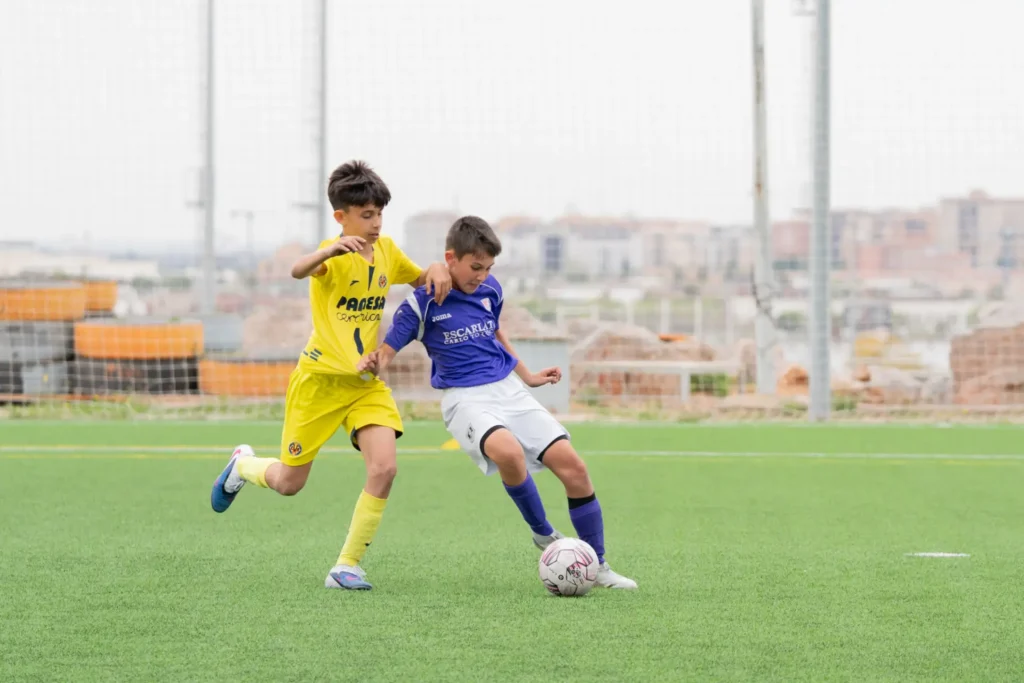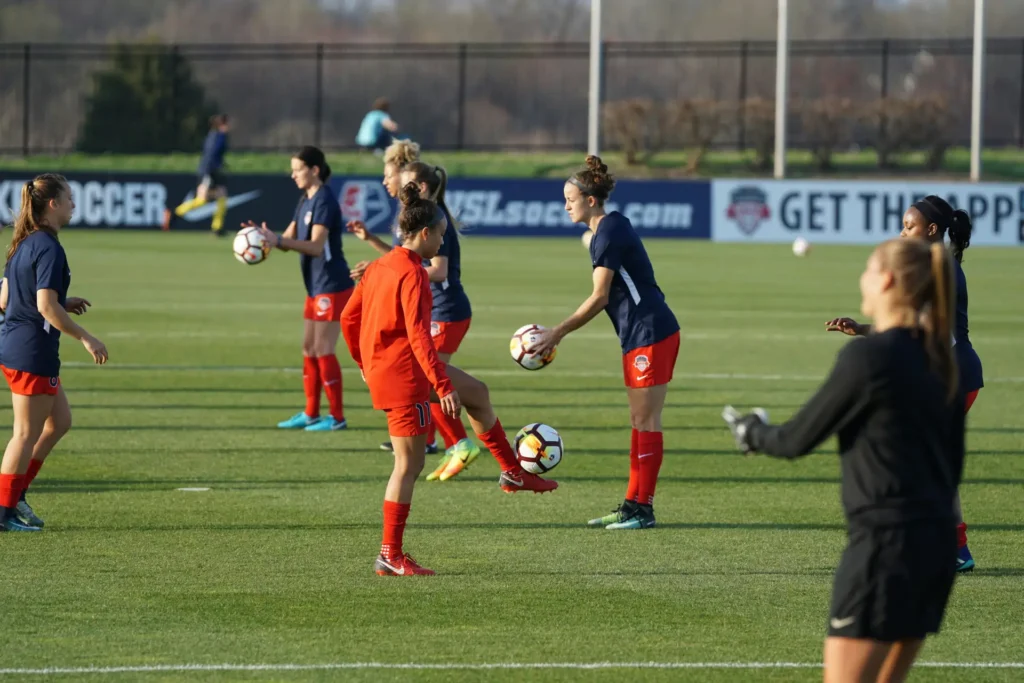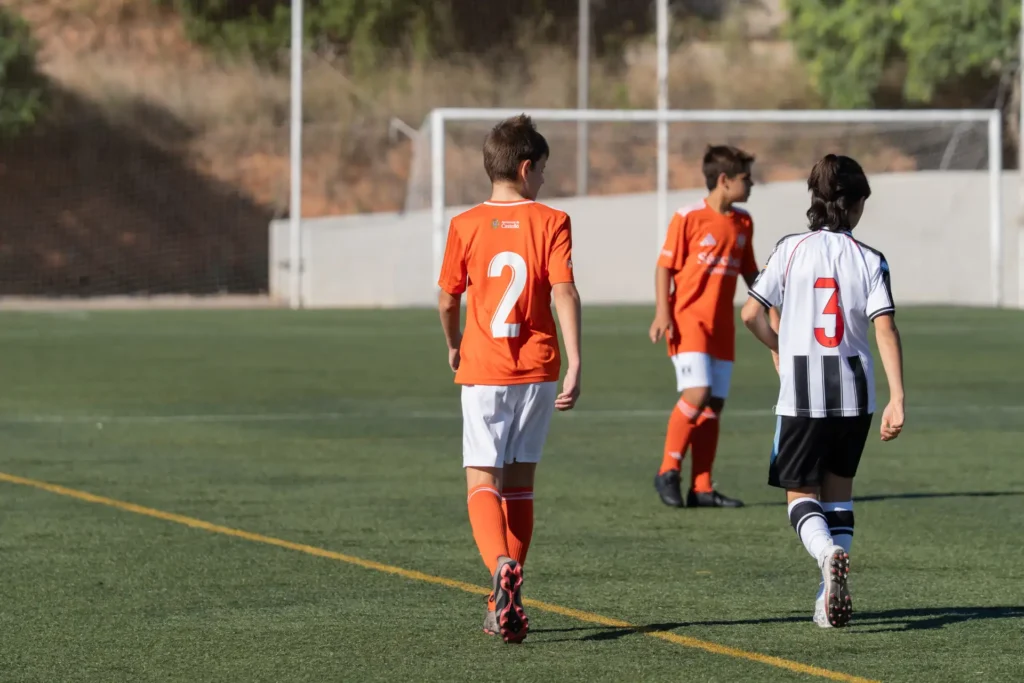

A guide for North American clubs, from inside a Spanish club competing against Valencia CF, Villarreal CF, CD Castellón and Levante UD.
For many North American youth clubs, a European soccer tour is a highlight of a player’s time at the club. But two tours that cost about the same and look alike in a brochure can deliver very different things.
One may be a cultural trip with some football attached. Another may place your team inside a working Spanish club for a week. A third may be the start of a relationship that shapes how your club develops players and coaches for years.
None of these is wrong. Problems start when a club books one kind of tour while expecting the results of another. That’s why the first question isn’t where should we go? It’s what are we trying to achieve?
At Primer Toque CF International, we host visiting teams inside our club in Castellón, Spain, where our teams compete every weekend in the Valencia regional federation. We see first-hand what visiting teams experience and what they take home.
What Is a European Soccer Tour?
A European soccer tour is a packaged trip for a youth team, usually lasting seven to ten days, that combines training sessions, friendly matches or a tournament, professional club experiences and sightseeing. Most tours are organized by specialist travel companies, while a smaller number are hosted directly by European clubs.
A typical package may include hotels, a coach bus, a guide, training sessions, three friendly matches, stadium tours and sometimes tickets to a professional match.
How Much Does a European Soccer Tour Cost?
Prices vary widely depending on the destination, the time of year, the length of the trip and what is included.
As of 2026, published examples include:
- A general Spain package from one US tour company starting at about $1,600 per person, including round-trip airfare, hotels, meals, transport, a bilingual guide and three friendlies against local teams of similar level.
- A seven-night Madrid and Valencia tour arranged for a Canadian club, priced at $2,325 per player excluding flights, built around sessions at Real Madrid and Valencia CF facilities, three friendlies and sightseeing.
- A nine-day tour built around a LaLiga club’s academy staff, starting at about $2,500 per person including airfare.
The headline price is only part of the picture. Families and clubs should check whether flights, all meals, match tickets, single rooms and airport transfers are included.
For parents: compare what a tour actually includes, not just the price on the first page.
Why Do Your Club’s Goals Matter More Than the Destination?
Your club’s goals decide which tour is right, because a cultural trip, a development trip and a long-term player and coach pathway require different environments, different opponents and different promises to families. Choosing the destination before the goal is one of the most common reasons tours disappoint.
Most clubs want some combination of three things.
1. A Great Team and Cultural Experience
Some tours are designed primarily as a memorable team experience: travel, bonding, a different culture, a famous stadium and perhaps a professional match.
That’s a perfectly valid goal. Players come home with stories about the trip, families see the value in shared memories, and the club can say we went and played in Spain.
For this goal, the destination and itinerary matter more than the exact level of opposition. Many reputable tour companies deliver this type of experience well.
2. Football Development and Benchmarking
Other clubs want to understand how their players and coaches compare with a European football environment and return home with information they can use.
For this goal, the quality of the coaching environment, the level of the opposition and the feedback after each match become far more important than the sightseeing.
3. A Long-Term Strategy for Players and Coaches
Some clubs want something bigger: a lasting relationship with a strong European club that helps develop their coaches, gives their best players a realistic next step and becomes part of the club’s identity.
That goal can’t be achieved in one trip. It depends on returning to the same environment, working with the same coaches and building trust over several seasons.
What this means for your club: rank these three goals before you look at a single itinerary. The ranking should decide the program you choose.
What Do Your Players, Parents, Team and Community Really Want From a Tour?
Different groups within a club often want different things from the same trip, so directors need to understand each group’s expectations before choosing a program. A tour that delights one group can disappoint another if those expectations were never discussed.
What Do Players Want?
Younger players often want the excitement of travel, playing abroad and seeing famous stadiums. Older and more ambitious players may want to know how they compare with Spanish players of the same age and what it would take to play at a higher level.
Those are different experiences, and the stronger players in particular can tell the difference between a sightseeing trip and a genuine football challenge.
What Do Parents Want?
Parents are usually paying for the trip, so they want to know it’s safe, well organized and worth the money.
Some see the tour as a family memory. Others hope it will help their child develop or open doors in the game. Clubs need to be honest about which of those outcomes the tour is designed to deliver.
A useful test is to write the promise to parents in one sentence and ask whether the club can still stand behind it after the trip. For example:
- “Your child will train in a Spanish club’s methodology and play three competitive matches against Spanish teams at our level.”
- “We will return with match video and a written assessment that will shape our spring season.”
Promises to avoid include anything about players being seen, scouted, invited back or offered a place.
What Does the Team Need?
A team at the right stage of development benefits from opponents matched to its level. Three tight, demanding matches often teach more than three heavy defeats against a professional academy, or three easy wins.
Age matters too. Younger groups, roughly U11 to U13, tend to benefit from technical, small-sided environments and festival-style tournaments. Older groups, roughly U15 to U18, often gain more from tactically demanding matches and detailed feedback.
What Does the Community Expect?
A tour also says something about the kind of club you are.
A recurring relationship with one European club can become part of your club’s story. A program that develops coaches benefits every team, not just the one that travels. And because tours are expensive, decisions about fundraising, sponsorship and scholarships affect who gets the opportunity to go.
What this means for your club: talk to each group before booking. A tour that matches everyone’s expectations is far more likely to be judged a success.
How Should Directors Think About the Value of a Tour?
Directors should treat a European tour as an investment of the club’s time, reputation and families’ money, and judge it by what it leaves behind after the trip: better players, better coaches, a stronger club identity and a clearer pathway. A tour that only produces good photos may be enjoyable, but it rarely changes how a club develops.
A director’s time is limited. Planning a tour takes months of work: choosing a provider, communicating with families, organizing fundraising, handling permissions and managing travel. That effort should produce something that lasts.
Where Does a Tour Create Lasting Value?
The most useful tours tend to create value in four areas.
- Player development: Players experience a different standard, receive honest feedback and return with clear priorities for improvement.
- Coach development: Coaches see how a European club designs sessions, applies its methodology and manages players, and bring those ideas back to the whole club.
- Club identity: A recurring relationship with a respected European club becomes part of how the club describes itself to families and the wider community.
- Pathway: The club can offer its strongest players a realistic, rules-compliant next step, rather than hoping a single trip produces an opportunity.
Can a European Partnership Help Recruit Players to Your Academy?
Yes, if the partnership is real and the club describes it honestly.
In a competitive youth market, families compare clubs on coaching quality, development, competition and opportunity. A club that can show a genuine, long-term relationship with a European club, with regular team visits, coach exchanges and individual development options, has something concrete to discuss with ambitious families.
The key word is genuine. Families increasingly recognize the difference between a club with a real partnership and one that has simply bought a branded trip. A relationship that produces visible results, such as better-coached teams, written evaluations and players who return home improved, tends to be far more persuasive than a logo.
What not to do: never use a European connection to suggest that joining your academy leads to scouting or professional contracts. That damages trust with families and misrepresents what any partnership can deliver.
How Can a European Partnership Help You Attract and Keep Strong Coaches?
A genuine European partnership can give coaches something many North American clubs struggle to offer: a professional development pathway that includes time inside a European club’s environment. For ambitious coaches, the chance to work alongside European staff, observe sessions and bring their teams back each year can be a strong reason to join and stay.
Why Does Coach Development Matter So Much?
Coaching quality has a major influence on player development, retention and a club’s reputation. Yet consistent coach education remains a challenge across North American youth sports.
According to the Aspen Institute’s Project Play, fewer than one-third of youth sport coaches had received training in evidence-based youth development practices when its Million Coaches Challenge began. The same report quotes Craig Morris, CEO of USTA Coaching, saying people “aren’t attracted to coaching as a career anymore”.
For a club director, that creates both a challenge and an opportunity. Clubs that invest visibly in their coaches have a stronger case when recruiting them.
What Can Coaches Gain From Time in a European Club?
When coaches travel with their teams into a working club environment, they can:
- Observe how sessions are designed and delivered within a consistent methodology.
- See how the same principles appear in the club’s matches at different age groups.
- Discuss player development, game models and session design with European coaches.
- Watch their own players respond to a different tempo and tactical demands.
- Return with sessions, language and ideas that can be shared across the club.
When this happens year after year with the same partner club, the relationship deepens. Coaches build professional connections, the host club understands your club’s standards, and the learning becomes cumulative rather than starting again each time.
Why Does That Help With Coach Retention?
A coach who knows the club offers regular opportunities to learn in Europe, and to take their own teams into that environment, has a professional reason to stay.
It also gives directors a way to recognize and reward strong coaches. Leading a team on a development tour, or spending time with a European partner club’s staff, can become part of a clear coaching pathway within the club.
What this means for your club: when evaluating a tour, ask what your coaches will bring home, not just what your players will experience.
What Are the Different Types of European Soccer Tours?
Most European soccer tours fall into five broad types: cultural and sightseeing tours, professional club experience tours, tournament tours, football-centre tours and club immersion. Each offers a different balance of travel and football, so understanding the differences helps clubs choose a program that matches their goals.
1. Cultural and Sightseeing Tours
These trips focus primarily on travel and team experience, with a few training sessions and friendly matches built into the itinerary.
They can be ideal for younger teams, recreational groups or clubs whose main goal is a memorable shared experience. The football is part of the trip, but it isn’t the main purpose.
2. Professional Club Experience Tours
These tours are built around training sessions associated with famous clubs, along with stadium tours and, sometimes, a professional match.
One published 2025 itinerary for a Canadian club, for example, included two sessions at Real Madrid’s training complex led by Real Madrid Foundation or certified coaches, two sessions at Valencia CF’s training ground led by Valencia CF coaches, three friendly matches and sightseeing in Madrid and Valencia (itinerary).
These experiences can be inspiring. Training at a world-famous facility is something many players never forget.
It’s important to understand what they usually involve, though. In most cases, the touring team trains as its own group with coaches from the club’s foundation, camps or international programs. Players generally aren’t training inside the club’s academy teams.
3. Tournament Tours
Tournament tours are built around international youth competitions, which can range from small invitational events to very large festivals.
The Mediterranean International Cup (MICFootball) in Catalonia is one of the largest. Its 2025 edition included 444 teams from 44 countries and more than 8,000 players aged 12 to 19, with teams representing clubs such as FC Barcelona, Real Madrid, Atlético de Madrid, Villarreal, Manchester United, Arsenal, Ajax and Bayern Munich (Canal 21 Ebre).
Large youth soccer tournaments in Europe offer atmosphere, variety and the chance to watch elite academy teams. But a visiting team’s opponents depend on the draw, and many matches may be against other international touring teams.
Smaller, club-hosted tournaments can sometimes guarantee stronger or more carefully matched opposition.
4. Football-Centre Tours
Some tours base teams at high-performance football centres or residential sports complexes. Coaching is provided by licensed coaches hired by the tour organizer, sometimes supported by a local coach, and teams play friendlies against local clubs.
One US provider, for example, describes tours held in high-performance football centres, with one Spanish trainer per team to supplement sessions (IFX Soccer).
The football can be well organized and valuable. But the team is inside a facility rather than inside the daily life of a club.
5. Club Immersion
Club immersion places the visiting team inside a working European club for the week. The team trains with the club’s own coaches and methodology, plays the regional opponents the club faces in competition, watches the club’s teams play, and receives the club’s assessment.
It’s the least common of the five types, and it offers a very different experience.
What Is Club Immersion, and How Is It Different?
Club immersion means a visiting team spends its week inside a working club that competes within its regional federation, rather than at a facility, a branded clinic or a tournament venue. It’s the closest a touring team can come to experiencing what a week inside a Spanish club actually involves.
What Qualifies as Club Immersion?
A genuine immersion experience generally includes:
- A real club, not a venue: The host has its own teams competing in the federation league system that season.
- The club’s own coaches: Sessions are led by the coaches who work with the club’s teams every week, not staff hired specifically for tours.
- The club’s own methodology: The visiting team trains with the same sessions and principles the club uses with its own players.
- The club’s opponents: Matches are played against the regional clubs the host faces, matched to the visiting team’s level, rather than against other touring teams.
- Time around the club’s teams: Visiting players can watch the club’s teams train or compete and experience the rhythm of a normal week.
- The club’s verdict: Feedback, analysis and written assessment come from the people who coach and compete in that environment.
- A relationship that can continue: The same club and coaches remain available for future teams, coaches and individual players.
How Common Is Club Immersion?
Based on over 20 programs we reviewed, true club immersion for whole teams is far less common than other tour types. Most of the market is built around tour company packages with branded sessions, football-centre programs and tournament travel.
The reason is practical. Hosting visiting teams inside a working club requires coaches, pitches, match scheduling with local clubs and an analysis staff, all while the club runs its own season.
Why Does Club Immersion Matter to Coaches and Directors?
- An accurate benchmark: Your team experiences the tempo, tactical demands and competitive standards of Spanish youth football.
- Real coach education: Your coaches see sessions designed and delivered by the club’s own staff, then watch those principles in matches.
- Credible feedback: Assessments come from coaches who work and compete in that league every week.
- A natural foundation for partnership: Because the club, coaches and environment remain the same, each visit builds on the last.
What Are the Limits of Club Immersion?
Club immersion isn’t the right choice for every group, and it has important limits.
Visiting teams generally train as their own squad with the club’s coaches rather than being mixed into the club’s teams. Individual player programs are different, because a single player can join an existing team. Visiting teams also play friendlies rather than official league matches.
And because the focus is football, an immersion week usually includes less sightseeing than a cultural tour.
What Does Club Immersion Look Like in Practice?
At Primer Toque CF International, the Team Evaluation follows the club immersion model.
Over seven days, visiting teams take part in four sessions led by Primer Toque CF coaches using the same methodology and sessions as the club’s own teams. They play three competitive matches against regional clubs that feed Spain’s professional academies, matched to the visiting team’s level. Matches against professional academy teams are possible for stronger groups but aren’t guaranteed.
The club’s analysis staff reviews two matches with players and coaches the following day, players can speak directly with coaches during the week, and the team receives a written assessment of strengths, development areas and season priorities. Visiting teams can also watch one of the club’s A teams compete.
It isn’t a scouting showcase or a sightseeing tour. It’s designed to show a team, and its coaches, exactly where they stand.
Who Will Your Team Actually Train With and Play Against?
Who leads your sessions and who your team plays against are the biggest factors in a tour’s football value, yet they’re often the least clearly explained parts of a brochure. Before booking, clubs should know exactly who the coaches are, who the opponents will be and whether players will ever share a pitch with local players.
What Does “Training With a Professional Club” Usually Mean?
Many tours advertise training “with” a famous European club. In practice, this usually means sessions for the touring team, delivered at the club’s facilities by coaches from its foundation, camps or international department.
Those sessions can be well run and memorable. But they’re a different experience from training inside a club’s academy environment.
When a tour advertises professional club training, ask:
- Who are the coaches, and what is their role at the club?
- Is the content the same as the club’s own training sessions?
- Will any of the club’s players take part?
Why Does It Matter Whether You Play Local Clubs or Other Touring Teams?
Matches against local Spanish clubs, ideally federation teams of a similar or slightly higher level, give the most accurate picture of what Spanish youth football demands. Players experience the tempo, tactical organization and competitive intensity of teams that play in that system every week.
Matches against other international touring teams can still be enjoyable and competitive. But they don’t show your players how Spanish teams play.
Tour descriptions often refer to “local teams of similar level” without naming them. Ask how many of your matches will be against Spanish federation teams and how opponents are matched to your level.
Will Your Players Train Alongside the Club’s Players?
Usually not, in a team program. It’s an important distinction that many families misunderstand.
In most team tours, including club immersion programs, the visiting squad trains together as its own team with the host club’s coaches. That allows the coaches to work with the group as a whole and gives the team a shared experience.
Individual programs are different. A single international player taking part in a club-based assessment may join an existing team, often starting with a development or B team, and train alongside local players day to day.
Both experiences have value. They simply serve different purposes.
Can a European Soccer Tour Get Players Scouted?
No European soccer tour can honestly promise scouting, trials or a chance for players to stay with a club. FIFA’s regulations on minors and the way professional clubs recruit make those outcomes unrealistic for touring youth players, and any tour that suggests otherwise should be treated with caution.
Why Can’t Tours Deliver Scouting Opportunities?
Several factors make scouting promises unreliable.
- FIFA’s rules on minors: Article 19 of FIFA’s Regulations on the Status and Transfer of Players generally prohibits international transfers of players under 18 unless a narrowly defined exception applies (FIFA Article 19). A European club can’t simply keep a 15-year-old from a touring team.
- Rules for official trials: Official international trials for minors generally begin from the season of a player’s 16th birthday, must be formally recorded with parental consent, and clubs aren’t allowed to charge players to attend (FIFPRO). A “trial” included in a tour package isn’t an official FIFA trial.
- How clubs recruit: Professional academies identify players mainly through their own scouting networks and regular competition, not through tour friendlies.
- Branded academies don’t sign players: Even European clubs’ own affiliated academies in the US have been reported to have “no explicit rights to sign players” (USA Today via PressReader).
What Are the Red Flags in Tour Marketing?
- “Play in front of scouts” or “get seen by LaLiga clubs.”
- “Top performers may be invited back for a trial.”
- Opponents described only as “local teams,” with no detail about level.
- Coaches described as “professional” without a clear club role.
- No written program, feedback or follow-up.
- No information about supervision, safeguarding or insurance.
- Sales materials built around famous former participants.
What Can a Tour Honestly Deliver?
- A memorable football and cultural experience.
- Exposure to a different style, tempo and coaching approach.
- A benchmark against local opposition, if matches are well chosen.
- Professional development for coaches.
- For clubs with a long-term partner, the start of a relationship that may, over several years, help an exceptional player find a legitimate next step.
For parents: if a tour is being sold on the possibility of scouting, ask the club to explain in writing exactly what that means.
Should Your Club Use a Tour Operator or Build a Partnership With a European Club?
It depends on your goals. If the aim is a cultural experience, a reputable tour company is often enough. If the aim is player development, coach education and a long-term pathway, a recurring relationship with one strong European club usually delivers more value than visiting a different destination every year.
What Are the Main Relationship Models?
1. One-off tours with a travel company
A different destination each time, with the tour company handling logistics. This is easy and flexible, and it works well for cultural goals. But there’s little continuity: coaches and opponents change, and no one in Europe gets to know your club.
2. A recurring host club
The same European club hosts your teams year after year. Coaches build relationships, evaluations can be compared over time, the host understands your level, and your coaches and players become known within that environment. The main consideration is choosing the right club, because you’re investing in one relationship.
3. Formal affiliation or licensing
Some European clubs license their brand, curriculum or coaching support to North American clubs, often for a fee. Coverage has described examples ranging from Liverpool’s US partner clubs, which reported 4,000 to 5,000 players in 2016, to Bayern Munich’s partnership with Global Premier Soccer and FC Barcelona’s licensed academies.
These arrangements can provide brand recognition and a structured curriculum. But they may involve significant fees, and they don’t create rights to sign players. Coaching quality still depends on the local staff.
4. Club-owned academies and joint ventures
A small number of European clubs operate their own residential academies or joint ventures in North America, such as FC Barcelona’s residency academy in Arizona. These are separate businesses rather than options most youth clubs can pursue, but they show how seriously European clubs view the North American market.
What Do Critics Say About Branded Partnerships?
The growth of European club brands in North American youth soccer has drawn criticism.
In 2014, former US international Alexi Lalas described foreign clubs’ expansion into the US as “a gold rush” and doubted they offered “a magic bullet.” Soccer America’s Mike Woitalla noted that top European academies don’t charge their own players, while their US ventures often do.
In 2016, Mike Hoyer, then acting executive director of AYSO, argued that coaching quality, not the European name, determines the player experience.
One useful test from that debate is simple: compare what a partner invests in your club with what it takes out.
What Should Your Club Expect From a European Partner?
- Football substance: Training inside a real club environment and opposition matched to your level.
- Honest feedback: Specific, written assessments of the team and, where appropriate, individual players.
- Coach education: Sessions, methodology and the reasoning behind them, so your coaches improve as well as your players.
- Consistency: The same coaches and contacts each year, so progress can be measured.
- Honesty with families: A partner that won’t oversell outcomes to your parents.
- A route for exceptional players: A legitimate, rules-compliant way to evaluate your strongest players further.
What Does the European Club Gain?
It’s worth being open about this. Hosting visiting teams provides revenue that supports the host club’s activities, builds international relationships and offers new opponents and experiences for its own players.
The relationship is commercial on both sides. That’s entirely reasonable, provided the promises are honest and both clubs benefit.
How Do You Build a Strong Club Partnership?
- Visit first. A director or senior coach sees the club’s training, teams and facilities before bringing players.
- Agree written objectives. Define what each visit is for, what feedback will look like and who the contacts are.
- Start with one age group. Run a single team evaluation or tournament, then review it honestly.
- Make it recurring. Establish an annual rhythm and rotate age groups so every cohort benefits.
- Add coach exchange. Your coaches spend time in the host club’s sessions, and host coaches share their methodology with your staff where possible.
- Agree how exceptional players will be handled. Decide in advance how to evaluate a standout player, how to talk to the family and what FIFA’s rules allow at each age.
- Measure it. Compare evaluations from year to year, gather feedback from coaches and track player development, not just trip satisfaction.
How Can a Tour Help Your Best Players Take the Next Step?
A tour helps most when it’s the first step in a structured pathway rather than a one-time attempt at discovery. A team visit can show which players handle the European standard best. Individual assessments, repeat benchmarking and, where circumstances allow, longer stays can follow.
What Does a Realistic Player Pathway Look Like?
- Team tour or evaluation: The whole team experiences the standard, and coaches identify which players coped best with the tempo and methodology.
- Individual player assessment: Selected players return for a week inside an existing club team and receive a written benchmark.
- Repeat benchmarking: A return visit six to twelve months later shows whether the player is closing the gap.
- Longer stays where family circumstances allow: Season-long programs with schooling can follow, always within FIFA’s rules on minors.
- Legitimate pathways at 16 and 18: Official trials become possible from 16 if a club initiates them. From 18, adult registration applies, along with non-EU squad limits at many professional clubs.
Why Does a Partnership Help at Every Step?
The host club already knows the player from earlier visits. Evaluations are comparable because they come from the same coaches. Families hear a consistent, honest message. And the North American club stays involved rather than handing its player to strangers.
What Should Clubs Tell Parents?
Very few players will go on to play professionally, and that’s normal. A University of Essex study of 198 players from two professional academies in Madrid found that around 6% progressed into full-time professional football, and about 4% reached LaLiga.
A long-term pathway for a minor usually involves family relocation. The real value of a structured pathway is development and honest information, even for players who never move abroad.
What Permissions, Safeguarding and Insurance Does a Touring Team Need?
A touring team generally needs travel permission from its national federation, safeguarding arrangements that meet its governing body’s standards, appropriate travel and medical insurance, and clear supervision plans. These remain the club’s responsibility even when a tour company handles the travel.
The information below is general guidance. Clubs should confirm current requirements with their own federation, state association or provincial association.
What Do US Teams Need?
U.S. Soccer requires teams travelling internationally to play games or tournaments to apply for travel sanctioning at least 30 days before departure. The application includes the tournament invitation or registration, a signed Ted Stevens Act acknowledgment, a roster verified by a U.S. Soccer Organization Member and a $200 sanctioning fee.
State associations and member organizations may have additional steps and deadlines, so clubs should check with their own governing body.
What Do Canadian Teams Need?
Canadian teams typically apply through their provincial or territorial association. Once approved, the application goes to Canada Soccer at least 30 days before the first game. Canada Soccer then forwards it to Concacaf for final approval, and the host federation and FIFA are notified.
Fees and forms vary by province.
What Safeguarding Standards Apply?
For US clubs operating under the U.S. Center for SafeSport’s Minor Athlete Abuse Prevention Policies (MAAPP), interactions between adults and minors during travel should be observable and interruptible. Adults and minors generally may not share hotel rooms unless an exception applies with written parental consent, room checks require at least two adults, and written parental consent is required for travel and lodging.
Canadian clubs should follow their provincial association’s requirements and Responsible Coaching Movement standards, including the Rule of Two and screening.
Clubs should also ask the host or tour company about their own safeguarding policies, who will have contact with players, and how supervision works during free time.
What About Insurance, Health and Budget?
- Insurance: Domestic player insurance may not cover everything abroad, so families typically need travel medical insurance.
- Injuries: Agree in advance who covers medical costs during training and matches.
- Health planning: Prepare for medication, allergies and emergency contacts, with consent forms available in both languages.
- Timing: Spanish youth seasons generally run from September to May, when local club opponents are available. Easter is popular for tournaments.
- Chaperones: Agree adult-to-player ratios and whether parents can travel with the group.
- Budget transparency: Confirm whether flights, meals, match tickets and single rooms are included.
For parents: before paying, ask the club who is responsible for supervision, what insurance is in place and whether the trip has been sanctioned by the appropriate federation.
How Do You Choose the Right European Soccer Tour?
Choose a European soccer tour by ranking your goals, matching the tour type to those goals, asking exactly who your players will train with and play against, refusing any scouting promise, and favouring a relationship you can build on over time.
What Questions Should You Ask Before Booking?
Goals and fit
- What is the main goal of this trip: culture, development or a long-term pathway?
- Does this program match that goal, and how will opponents be matched to our level?
Football substance
- Who leads each session, and what is their role at the club?
- Will our players train inside a club environment, alongside the club’s players, or as our own team?
- How many of our matches will be against Spanish federation clubs, and how many against other touring teams?
- What feedback will we receive: video, a written report or meetings with coaches?
- What will our coaches bring home?
Promises and ethics
- Does any material mention scouts, trials or players being invited back?
- How does the program explain FIFA’s rules on minors to families?
Relationship
- Can we return with other age groups and work with the same coaches?
- Is there an opportunity for director visits or coach exchange?
- If one of our players is exceptional, what is the legitimate next step?
Logistics and safety
- Who is responsible for federation travel permission?
- What are the safeguarding policies, supervision ratios and lodging arrangements?
- What does the price include, and what costs extra?
A credible program should be able to answer every one of these questions clearly.
Where Should Directors Invest Their Time?
If your club’s priority is a memorable team experience, invest in finding a reputable tour company and planning a well-organized trip.
If your priority is developing players and coaches, invest in one strong relationship. Visit the club, start with one team, return each year, involve your coaches and measure the results.
Over time, that relationship can become one of the strongest parts of your club’s offer to families, players and coaches.
Frequently Asked Questions About European Soccer Tours
How Much Does a European Soccer Tour Cost?
As of 2026, published examples range from about $1,600 per person including flights to around 2,300–2,500 per player for tours built around professional club facilities or academy staff (Premier International Tours; itinerary). Always check whether flights, meals, match tickets and single rooms are included.
How Long Should a Youth Soccer Tour in Europe Be?
Most tours run seven to ten days. A week generally allows time to recover from travel and complete three or four training sessions and three matches.
When Is the Best Time to Take a Team to Spain?
Spanish youth seasons generally run from September to May, which is when local club opponents are most available. Easter is a popular period for tournaments, while summer offers fewer competitive local teams.
Will Our Players Train With a Professional Academy?
Usually not inside the academy itself. Most professional club sessions on tours are delivered by the club’s foundation, camp or international staff for the visiting team. Ask who leads each session and what their role at the club is.
Can European Soccer Tours for American Teams Lead to Scouting or Trials?
No tour can honestly promise that. FIFA’s rules restrict international transfers involving minors, official trials generally begin from 16 and are initiated by clubs, and clubs can’t charge players to attend an official trial.
What Are the Best Youth Soccer Tournaments in Europe?
It depends on your goals. Large festivals such as MICFootball, with 444 teams from 44 countries in 2025, offer scale and atmosphere, while smaller club-hosted tournaments may provide more carefully matched opposition. Check which opponents you’re guaranteed to play.
Do We Need Permission to Take Our Team to Europe?
Yes. US teams generally apply to U.S. Soccer at least 30 days before travel. Canadian teams typically apply through their provincial association to Canada Soccer at least 30 days before the first game, with final approval from Concacaf.
What Is Club Immersion?
Club immersion is a tour format in which a visiting team spends its week inside a working club that competes in its regional federation, training with the club’s coaches and methodology, playing its regional opponents and receiving its assessment. It’s less common than other tour types.
Is a One-Off Tour or a Long-Term Partnership Better?
For a cultural experience, a one-off tour can be ideal. For player and coach development, a recurring relationship with one strong club usually provides more value through consistent coaching, comparable feedback and a clearer pathway.
The Best Tours Leave Something Behind
European soccer tours can be among the most valuable experiences a youth club offers. Players see a different football culture, coaches learn new ideas, and teams create memories that last long after they return home.
But the most successful tours begin with a clear understanding of what the club wants to achieve.
If the goal is a great shared experience, choose a reputable organizer and enjoy the trip. If the goal is to develop players and coaches, look for an environment where your team can experience the daily reality of a European club and come home with honest information about where it stands.
And if the goal is to build something lasting, invest in one strong relationship rather than a new destination every year. Over time, that partnership can strengthen your coaching, give your best players a realistic next step and become part of what makes your club different.
The question isn’t simply where should we go? It’s what should this trip leave behind?
Experience a Spanish Club From the Inside
If your club’s goal is development rather than sightseeing, consider spending your week inside a working Spanish club.
Primer Toque CF International’s Team Evaluation brings visiting teams into an established youth club in Castellón, within Spain’s Valencia region. Teams train with the club’s coaches using its methodology, play competitive matches against regional Spanish clubs matched to their level, receive video analysis, and return home with a written assessment of strengths, development areas and priorities for the season.
For clubs looking further ahead, we also work with directors to build long-term programs that combine team visits, coach development and individual player assessments.
Experience the standard. Develop your coaches. Build a pathway that lasts.
Explore Primer Toque CF International’s Team Evaluation and club programs